Real sumo
Grand Sumo Tournament or exhibition show?
What a Grand Sumo Tournament is, where Tokyo's are held, and how an exhibition or show differs: rank, stakes, length and what that means for your booking.
Reserve a place at the ring ↗Quick answer
A Grand Sumo Tournament, a honbasho, is the professional competition in which results decide promotion and demotion. The calendar holds six, and three of those are Tokyo's, held at the Ryōgoku Kokugikan, each fifteen days long. Exhibitions and shows are different: whatever happens in them has no effect on a wrestler's rank. A Shibuya sumo show belongs in the second group, and that is a feature, not a flaw.
What a honbasho is
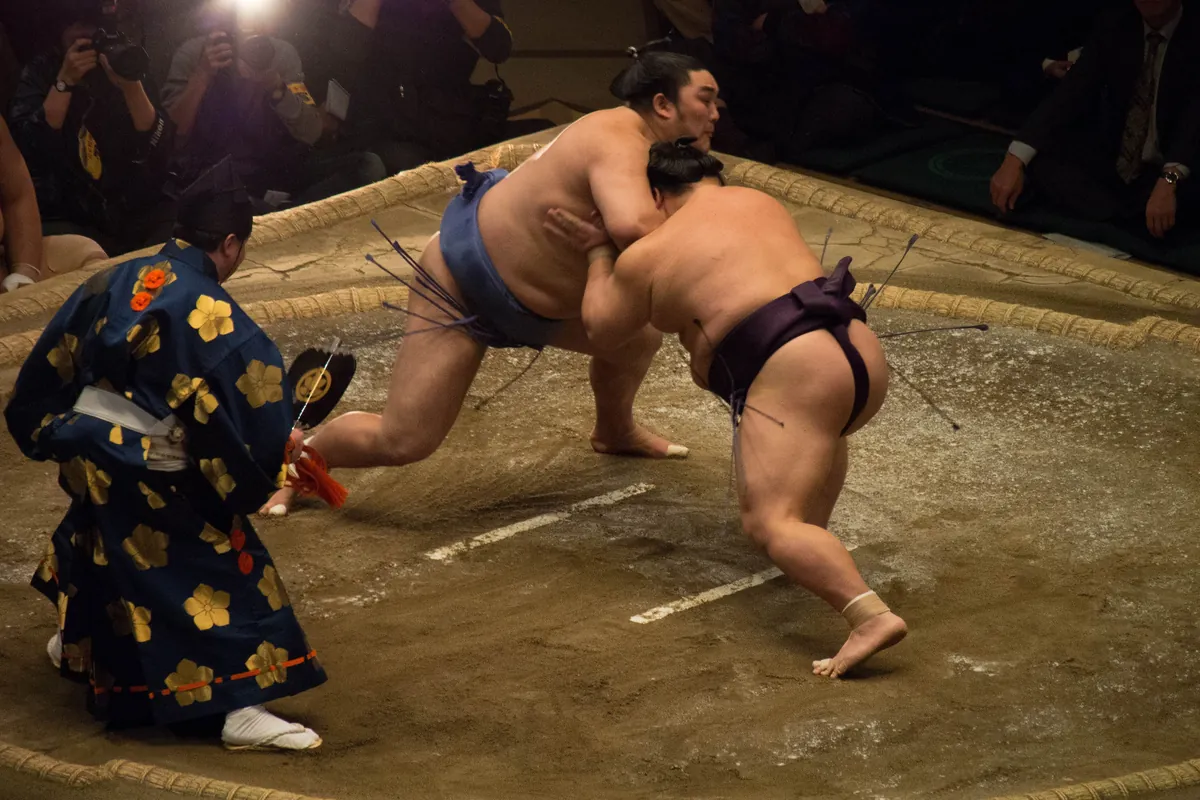
Honbasho means main or real tournament. Wikipedia says only honbasho results matter in determining promotion and relegation on the ranking list, and that the Japan Sumo Association has organised them since 1926. Since 1958 there have been six a year, each over fifteen consecutive days, in four locations. The word real is the point of the name: it separates these events from the many displays that surround them, and it explains why a wrestler's whole career is measured in honbasho records.
Where and when in Tokyo
Half the calendar belongs to Tokyo and its Ryōgoku Kokugikan, which hosts its three; Osaka, Nagoya and Fukuoka share the rest. The Japan Sumo Association's own schedule lists the Kokugikan for those three months. Each tournament begins on a Sunday and ends on a Sunday two weeks later. This guide gives no dates, because the calendar changes each year; the association's schedule page does, and it is the page to check before you plan a trip around a tournament.
How a day is organised
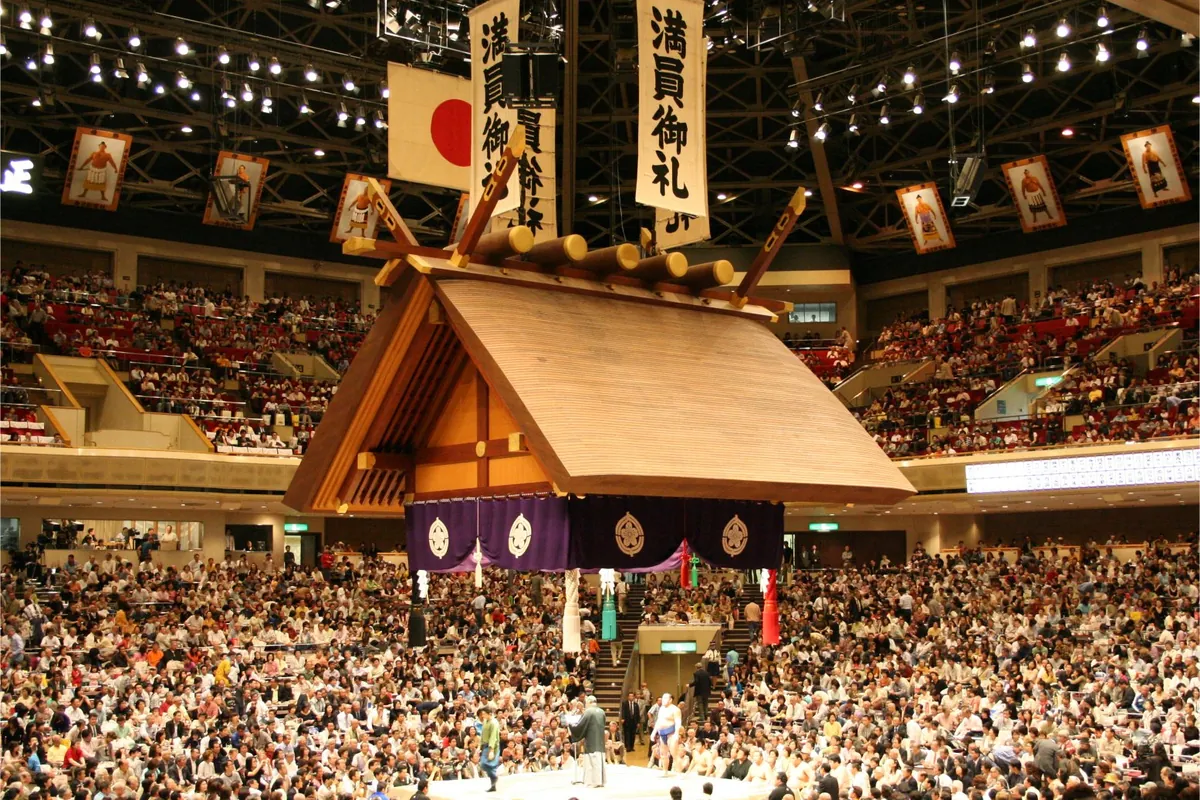
Wikipedia explains that wrestlers in the top two divisions have one match a day, while lower-ranked wrestlers have seven bouts over the fifteen days. Each day is arranged so that the highest-ranked contestants compete at the end, so the early hours belong to the lowest ranks. The banzuke, the ranking list, appears roughly a fortnight ahead of each tournament, and it is built from the results of earlier honbasho. A visitor who arrives late in the day therefore sees the best-known wrestlers.
What an exhibition is
Wikipedia says that besides the six tournaments, exhibition competitions are held at regular intervals each year in Japan, and that about once every two years the top wrestlers visit another country for such exhibitions. None of these displays counts toward a wrestler's future rank. The association also runs provincial tours, through which wrestlers visit towns across the country. Wikipedia adds that wrestlers do not take such displays as seriously, since nothing in them touches their rank.
Where a Shibuya show fits
The booking page for the Shibuya show states plainly that it is entertainment and no tournament. Its job is the one an exhibition has: to show what the sport is made of, with an English-speaking MC explaining. Nothing in it is decided, and nothing in it affects a ranking. Judge it as an introduction, and it holds up; judge it as a substitute for a tournament, and it will always lose.
How to see the real thing
If the show makes you want more, the real sport comes to Tokyo in the tournament months. Tickets and dates are the association's to publish, and this guide does not give advice on them. Check the association's schedule page for the current year, and allow for the fact that tournament days are long and the best-known wrestlers fight late in the day. A visit to a tournament and an evening at a show answer different questions, and many visitors enjoy having done both.
Sources