Compare
Sumo show or Tokyo night drive?
A sumo show in Shibuya or a night drive across Tokyo in a tuned sports car: which evening should you book? Length, effort, weather, getting home and who each suits.
Reserve a place at the ring ↗Quick answer
Choose the sumo show if you want a short, seated, indoor evening that explains something and may end with a turn in the ring. Book the night drive if you want movement: three to four hours in a Japanese sports car across Tokyo's expressways, with a stop at a huge parking area and a drop-off in the city. Both are rated highly and they ask very different things of you. For a first night in Tokyo, the sumo show is the lighter choice.
Two Tokyo evenings side by side
| Sumo show | Night drive | |
|---|---|---|
| Length | 75 minutes | 3 to 4 hours |
| You do | Watch, learn and perhaps join the ring draw | Ride in a sports car with stops on the route |
| Setting | Indoors, in a club room in Shibuya | Expressways, a parking area, city landmarks |
| Group | Shared with other guests | Shared, not private |
| You choose | The date | The date, but not the car |
| Getting home | Your own way | A drop-off in central Tokyo |
Quick verdict
These are less rivals than opposite answers to what you want from a Tokyo night. One asks you to sit and watch; the other asks you to travel and look. The sumo show is compact, indoors and explained to you in English. The drive is long, carried out through a car window and built around speed, light and scenery. If your evening has room for only one, decide first whether you would rather learn something or move through the city, and then book the one that matches. Neither is wasted on the right person. A good test is to picture the first ten minutes of each: in one you are seated and listening, in the other you are already moving.
The sumo show in brief
The show runs for 75 minutes. Sumo wrestlers demonstrate techniques and rituals, with the salt purification named on the booking page, and fight bouts, while an English-speaking MC explains. Afterwards a few guests may take on a wrestler in the ring, with limited spots and a lottery if too many apply, and photographs with the wrestlers are on the ticket. The show is entertainment rather than a tournament, the booking page notes, and no meal comes with it; the only drink is a welcome bottle of water. Start times are set day by day in the calendar.
The night drive in brief
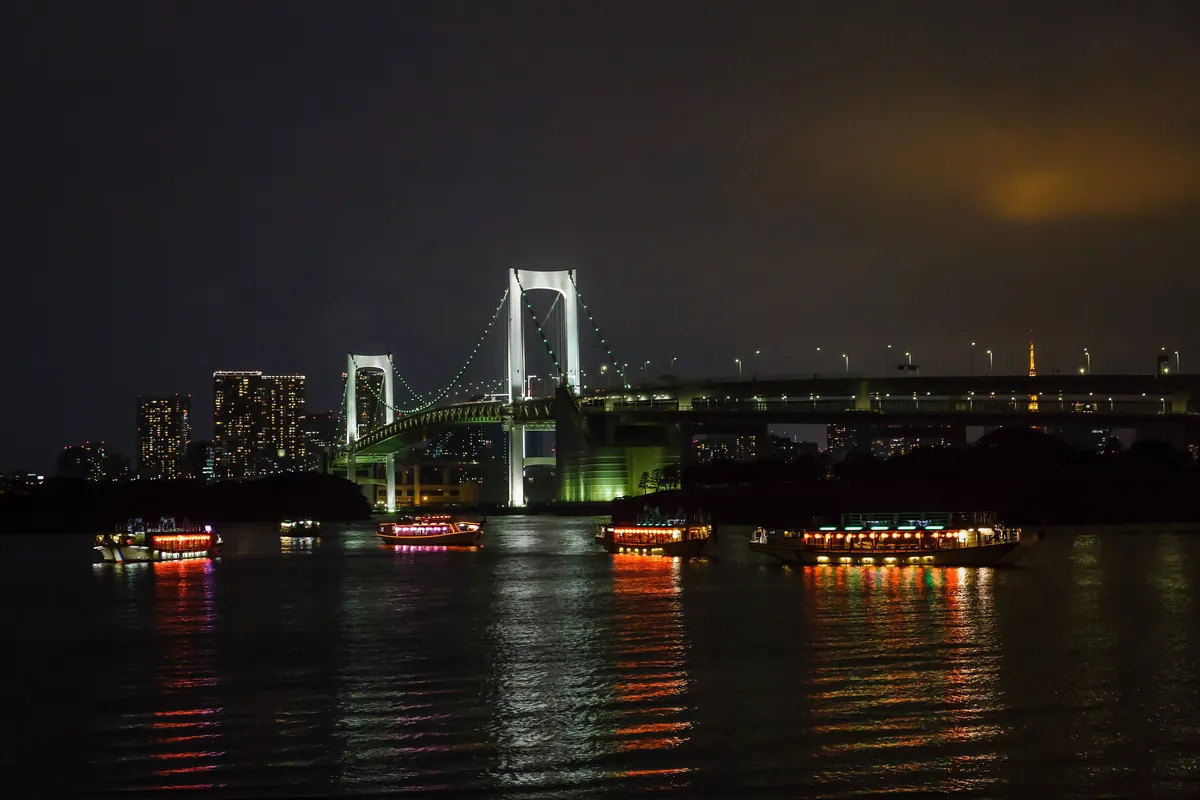
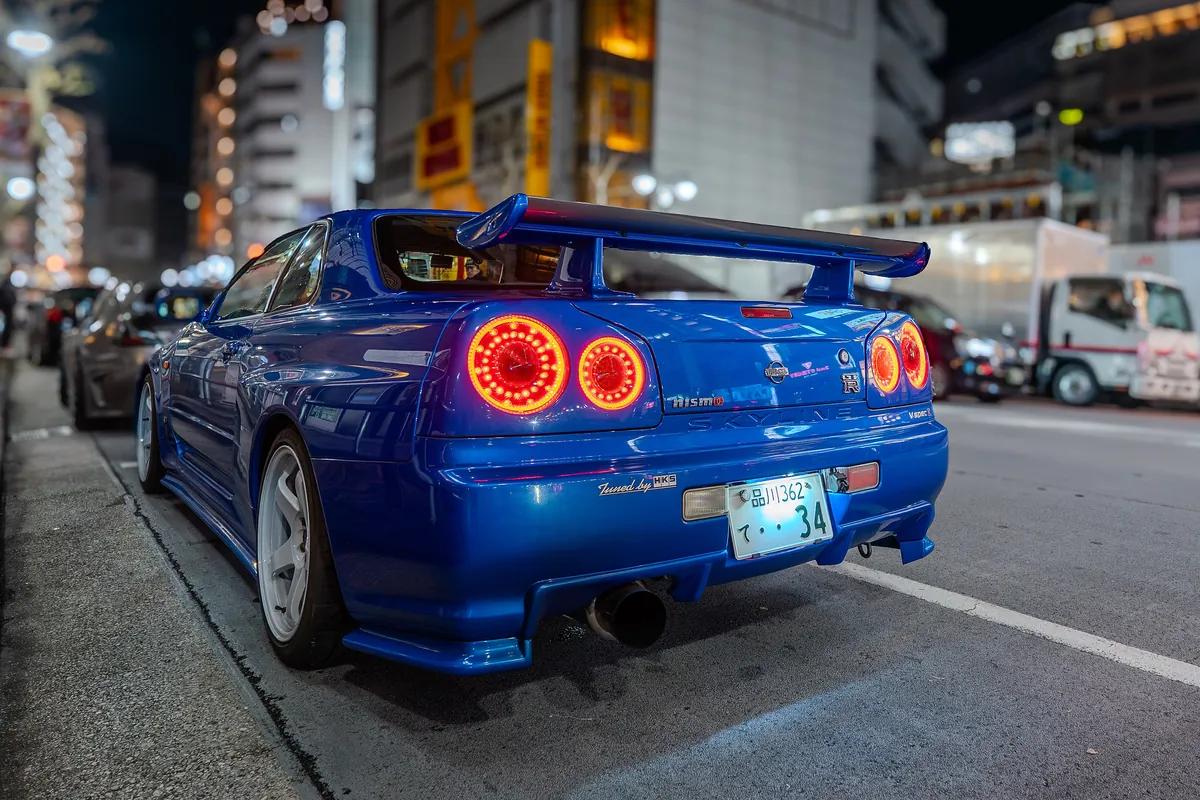
The drive is a ride of three to four hours in a Japanese sports car drawn from the operator's fleet. The booking page names a route along the Wangan and C1 expressways, tunnels, Rainbow Bridge, the Daikoku Parking Area, a car-supply shop and a photo stop at Tokyo Tower, and says you cannot choose the car. It is not a private tour, and cars carry other guests. The title borrows from a film franchise, but the page says no drifting takes place on public streets. The page gives three starting locations, and which one applies depends on your option; one option skips the shop and the tower. The page lists cars from the fleet but promises none of them, and this guide does not either.
What each evening asks of you
The sumo show asks for 75 minutes and a seat. The drive asks for most of an evening: three to four hours, a meeting point that depends on your option, and a willingness to spend that time in a car at night. The drive's booking page asks guests to arrive ahead of the start and to watch their messages for changes, so plan to be early and reachable. Each date in the sumo calendar has its own start time, so look before you plan dinner. Neither needs special fitness, but only one leaves your evening free afterwards for a meal or a walk. Read each booking page for the exact meeting point, which differs by option on the drive.
The Daikoku stop
Wikipedia says the Daikoku Parking Area is the largest parking area on the Shuto Expressway. It sits in Tsurumi-ku, Yokohama, so the drive leaves Tokyo, and it can be reached only by car, since no public transport serves it. Its size makes it a regular meeting place for private cars, including sports and custom cars, though use is restricted at midnight on Fridays and Saturdays under neighbourhood noise measures. The booking page itself warns that the number of cars at the meet can be affected by weather, so the scene on your night cannot be promised, and this guide does not promise one.
Weather and variability
The sumo show is indoors, so rain changes nothing but your walk to the door. The drive is exposed to the weather in a different way: the booking page says the number of cars at the parking-area meet can change with it, and that you cannot pick the car you ride in. That variability is part of the appeal for some people and a drawback for others. If you want a fixed, repeatable experience, the sumo show is the safer choice. If you like an evening that can surprise you, the drive offers more room for it, as long as you accept that the surprise may be a quiet car park.
Getting home
After the sumo show you make your own way back, and Shibuya is among the best-connected places in Tokyo: Wikipedia lists a string of rail and metro lines at its station, and the show's meeting point is in the same ward. The drive's page promises a drop-off at your accommodation or another place in central Tokyo, so you are carried home at the end. That matters at the end of a three-to-four-hour night. It matters less after a 75-minute show, which leaves you the choice between a late dinner, a walk through the crossing and an early night. Check the route home on your phone before the show ends, since the last trains matter more to a late evening than to an early one.
Who each suits
The sumo show suits families, first-time visitors, groups and anyone curious about the sport who wants it explained in English. The night drive suits car fans, people who like moving through a city after dark and travellers who prefer a longer, looser evening. Couples often split the difference: one night of each on a longer stay. If you cannot decide, the shorter evening is the lower-risk booking, while the longer one rewards people who already know they like cars and are happy to hand the choice of route and stops to someone else. Neither is a good fit for a traveller who wants a quiet night in.
Who this isn't for
Each evening has people it does not suit, and the booking pages say so. Read the notes on the page you are about to use before you pay, and ask the page, not this guide, about any health or access question. Nothing here replaces the operator's own terms, which can change and which govern your booking. The points below come straight from those pages and are the ones worth a second look before you pay:
- Skip the sumo show if you want a meal, a tournament or a guaranteed turn in the ring.
- Skip the night drive if you are pregnant or have a heart condition, since its booking page lists both as unsuitable.
- Wheelchair users are listed as unsuited to the sumo show.
- Skip the night drive if you want to choose the car or ride alone with your group.
Doing both
You can book both on one trip, on separate nights, because the two calendars and bookings are independent. Choose the sumo show first if your dates are tight, because the page marks it as likely to sell out. A sensible order is the shorter, indoor evening early in a stay, when jet lag is worst, and the drive later, when you are rested and want to see the city after dark. The two never compete for an evening, and neither replaces the other, so a trip of several nights has room for both. Each calendar is separate, so check both before you commit to either.
The bottom line
If you want one evening that explains Japan's national sport, fits into 75 minutes and ends with a photograph beside the wrestlers, book the sumo show. If you want hours of motion, lights and engines, and are happy not to choose the car, book the night drive. Both can be superb for the right person, and both can disappoint the wrong one. Match the evening to the mood you will be in, and you will have chosen well. If you are still undecided, start with the shorter one and keep the longer one for later.
Frequently asked questions
Which is better value?
Look at each calendar's from-price for your own dates. The sumo show is the shorter evening at 75 minutes. The night drive runs for three to four hours and ends with a drop-off in central Tokyo.
Which suits children?
The sumo page says infants sit on laps. The drive's page lists pregnant women and people with heart problems as not suited, and sets age rules for one option. Ask each page about your children.
Which is better in bad weather?
The sumo show, because it is indoors. The drive's page says weather can change how many cars appear at the parking-area meet.
Which is shorter?
The sumo show, at 75 minutes; the drive takes three to four hours.
Is English spoken on both?
Yes. The sumo show has an English-speaking MC. The night drive offers English among several languages.
Can both fit into one trip?
Yes, as long as they fall on different nights; they are separate bookings.
Sources