The moves
How a sumo bout is won: the kimarite
One rule, a long list of techniques and a referee's fan: how a sumo bout is won, which moves you will see most and why a verdict can be challenged.
Reserve a place at the ring ↗Quick answer
A sumo bout is won when a wrestler drives his opponent out of the ring or brings him down so that anything other than the soles of his feet touches the clay. The winning technique is called a kimarite. Japan's sumo association recognises 82 of them, yet only about a dozen are common. The referee names the winner with his fan, and judges can challenge the call. Watching for the force out, the push out, the throw and the slap down covers most bouts.
The one rule
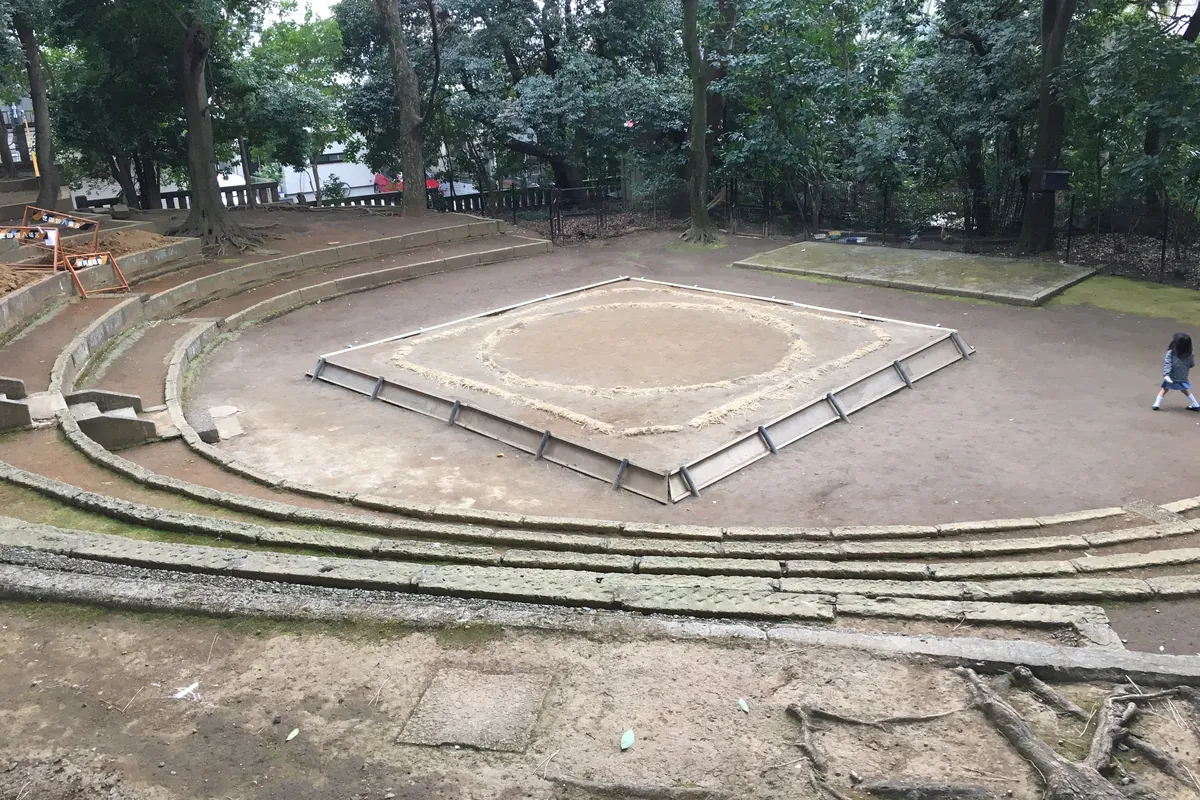
Wikipedia gives the rule of sumo in a single line: a match is decided by a wrestler being forced out of the dohyō, or touching the ground inside it with any body part other than the soles of his feet. He need not touch the ground outside the ring to lose. The ring is a circle of rice-straw bales, partly buried, set on a platform of raised clay, so the edge is easy to see and the end of a bout is clear.
Two styles
Wrestlers tend toward one of two approaches. In the belt style, yotsu-zumō, a wrestler grabs his opponent's mawashi and forces him out. In the pushing style, oshi-zumō, he drives his opponent back without a firm grip. Wikipedia describes both as basic forms, and the styles explain why two bouts can look so different: one is a grapple that grows still, the other a burst of thrusts that is over almost as soon as it starts.
The force out
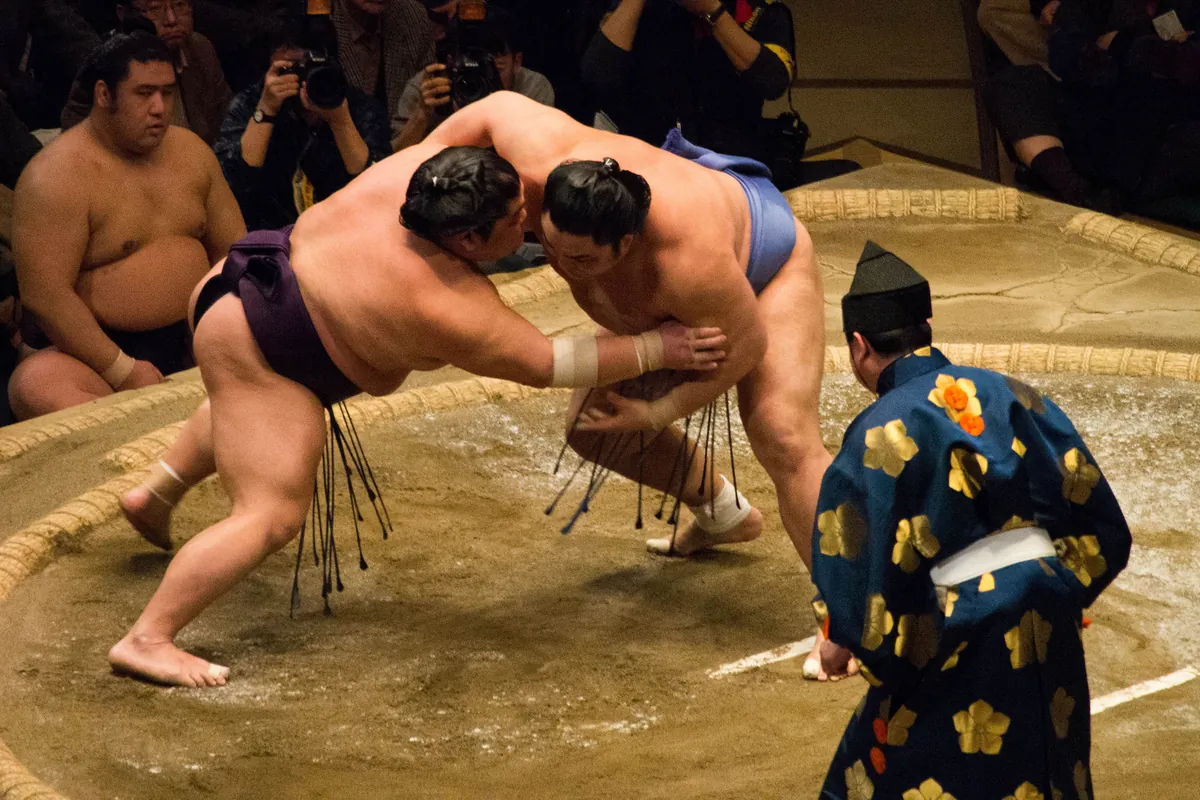
Yorikiri, the frontal force out, is the staple. A wrestler keeps a grip on the mawashi, or a full body hold, and forces his opponent out of the ring. Wikipedia calls it the most common kimarite and gives it 32.4 per cent of all professional matches. If a bout is a grapple that ends with one wrestler walking the other backwards over the straw, it is most likely a yorikiri. Its close relative, yoritaoshi, ends the same way except that the loser falls.
The push out
Oshidashi, the frontal push out, uses the arms alone: the wrestler does not hold the belt and keeps contact until the opponent is out. Tsukidashi is the same idea carried out with thrusts and without maintaining contact. Wikipedia lists these among the basic techniques. They are the signature of the pushing style and tend to be fast, which is one reason the first few seconds of a bout matter so much to the result.
Throws and the slap down
Throws form their own group. Uwatenage, the overarm throw, has the attacker reach over his opponent's arm, grip the belt and throw him sideways to the ground. Hatakikomi, the slap down, makes an opponent fall forward after a slap to the shoulder, back or arm. Wikipedia says many treat it as a last resort when pushed back, though some wrestlers rely on it. It also notes that with superior technique, smaller wrestlers can beat much larger ones.
Winning without a technique
Wikipedia also lists five non-techniques, ways to win without using one. They include an opponent accidentally stepping out of the ring unattacked, stepping too far forward in the middle of his own attack, or falling over backwards without a technique used against him. A foul can also decide a bout: striking with a closed fist is one of the forbidden moves, called kinjite, and disqualifies the offender. The list is long, and almost all of it is rare.
The referee and the fan
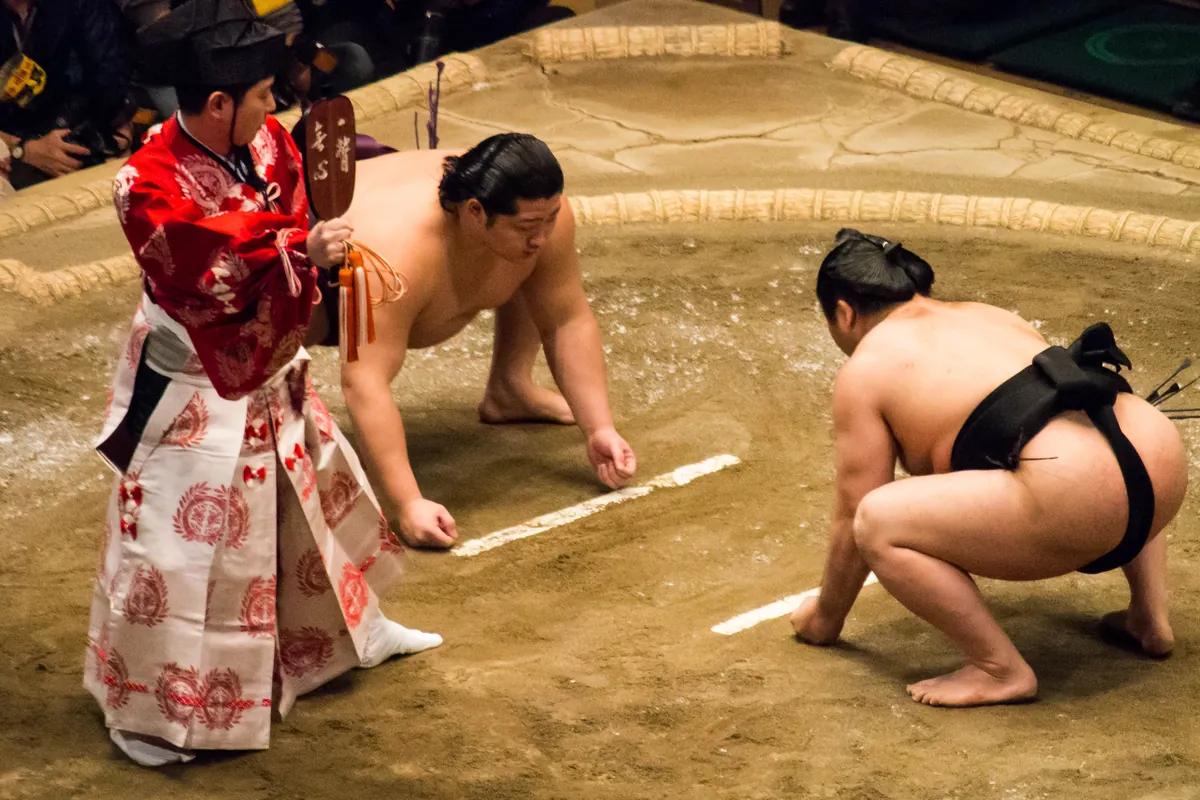
The referee, the gyōji, announces the kimarite at the end, though judges can modify his decision. He points his gunbai, a solid war fan, at the winner's side. If one of the five judges around the ring disputes it, they meet in the ring for a mono-ii, and Wikipedia says they can confirm the call, overturn it or order a rematch. Video review adds two more judges. The decision is not final until that conversation ends.
What to watch for
At a show, listen for the MC's names for each move and look for the grip: a hand on the belt points to a force out or a throw, open hands on the chest to a push out. Watch the feet near the straw, because that is where a bout turns. The aim of learning the vocabulary is simple: when one wrestler suddenly sits down in the clay, you will know that something specific happened, and roughly what.
Sources