Start here
Shibuya sumo show: is it worth it?
Is the Shibuya sumo show worth it, and will you get to step into the ring? What the wrestlers demonstrate, what the ticket leaves out and who will enjoy it.
Reserve a place at the ring ↗Quick answer
Yes for most first-timers, as long as you want a short, lively look at sumo with a chance of joining in, and not a tournament or a dinner. Over 75 minutes, sumo wrestlers demonstrate techniques and rituals, including the salt purification, and fight bouts a few steps from your seat while an English-speaking MC explains what you are seeing. The ring turn goes by lottery and no meal is included. Places can go quickly because the show is flagged as likely to sell out; pick a date soon.
The evening at a glance
| Shibuya sumo show | |
|---|---|
| Length | 75 minutes |
| What happens | Demonstrations of techniques and rituals, and bouts |
| The host | An English-speaking MC |
| The ring turn | Optional; spots are limited and a lottery applies when demand is high |
| Photos | Allowed, and photos with the wrestlers are on the ticket |
| Welcome drink | Bottled water |
| Meal | None included |
The short verdict
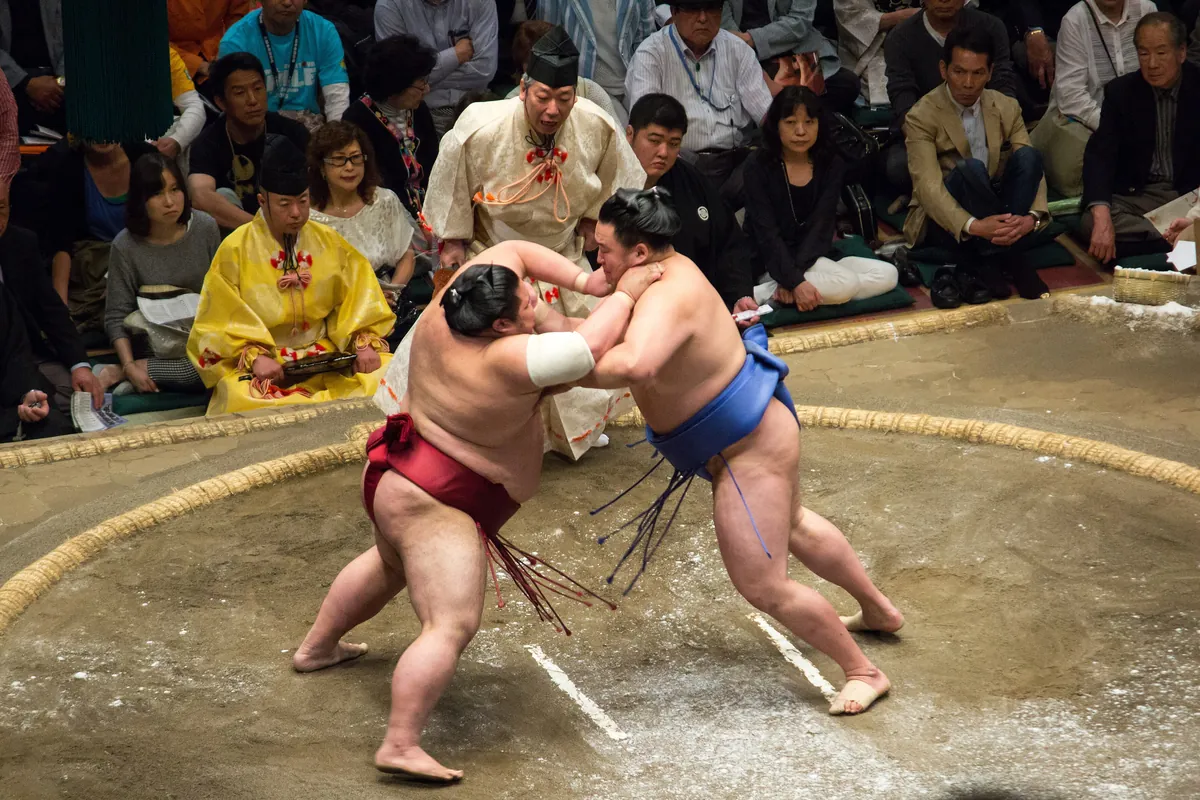
The show works because sumo is hard to follow cold, and this one is built for the cold viewer. A bout is over in seconds, the rules fit in a sentence, and the rituals around each bout have names you have never heard. An MC who speaks English supplies the missing context while wrestlers show their moves at close range. In 75 minutes you learn why wrestlers stamp, why salt flies and what counts as a win. That is a fair trade for one evening in Tokyo, and the length sits easily between a late-afternoon outing and dinner. It stops being fair only if you arrive expecting rankings, rivalries or a meal.
Inside the room
The booking page describes live demonstrations of powerful techniques, the rituals of the sport, with the salt purification named outright, and bouts. After that, some guests may be chosen to take on a wrestler in the ring, and photographs are welcome, including photographs with the wrestlers themselves. An English-speaking MC guides the room throughout, which matters because the rules and the rituals mean little until someone says what they are. The page gives no running order, and this guide invents none: the calendar shows the start times, and what the wrestlers choose to show can differ from one show to the next.
A show, not a tournament
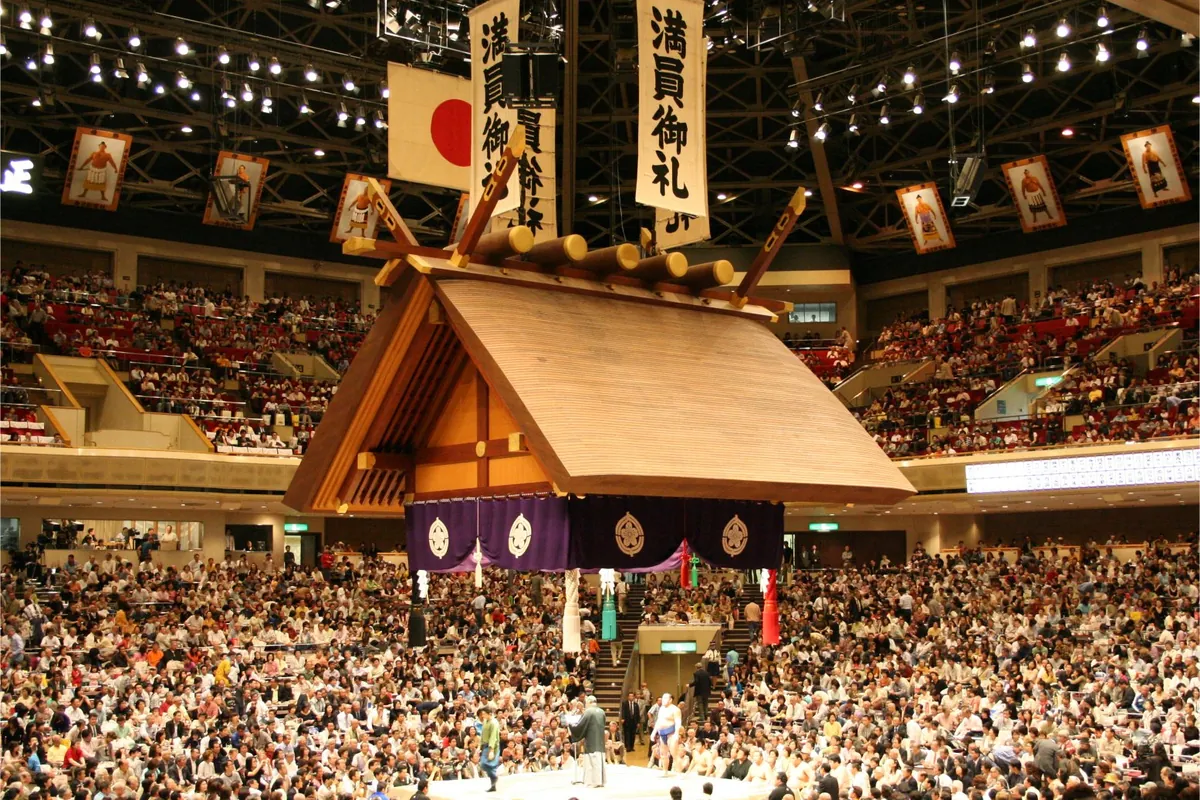
The booking page states that this is an entertainment show and not a tournament. The difference lies in what is at stake. A tournament, called a honbasho, decides who is promoted and demoted on the ranking list, and Wikipedia says only those results count. Six are held each year across four cities, and the Ryōgoku Kokugikan is Tokyo's venue. Nothing at a show of this kind moves a wrestler's rank. Think of it as a guided introduction to the sport, played at close range, and judge it by that standard. The two are separate experiences, and enjoying one does not require the other.
Read next: Grand Sumo Tournament or exhibition show?
The ring turn is a lottery
Once the demonstration ends, some guests may take on a wrestler in the ring. Spots are few, and the booking page says a lottery decides when too many people apply. That leaves three outcomes: you are chosen, you are not chosen, or you leave the ring to others. None of them should decide whether you book, because you cannot buy a turn in advance. Pick the show for the demonstration, the explanation and the photographs, and let the ring be a bonus. A group that wants a shared story from the night will get one from the bouts alone, and anyone who is picked gets a bigger one. If you are not picked, the demonstration and the photographs are still yours.
No meal on this ticket
Some sumo evenings in Tokyo are built around a shared stew. This one is not. The ticket lists a welcome drink of bottled water and no meal, and nothing on the booking page promises snacks, so this guide does not either. Plan dinner before you come or afterwards; Wikipedia describes Shibuya as a major commercial and entertainment district, so places to eat are never far. Decide which side of the show suits you, because arriving hungry and expecting food is the one avoidable disappointment. If a hot pot is what your evening hinges on, choose another booking rather than bringing the wrong hopes here.
What you will recognise afterwards
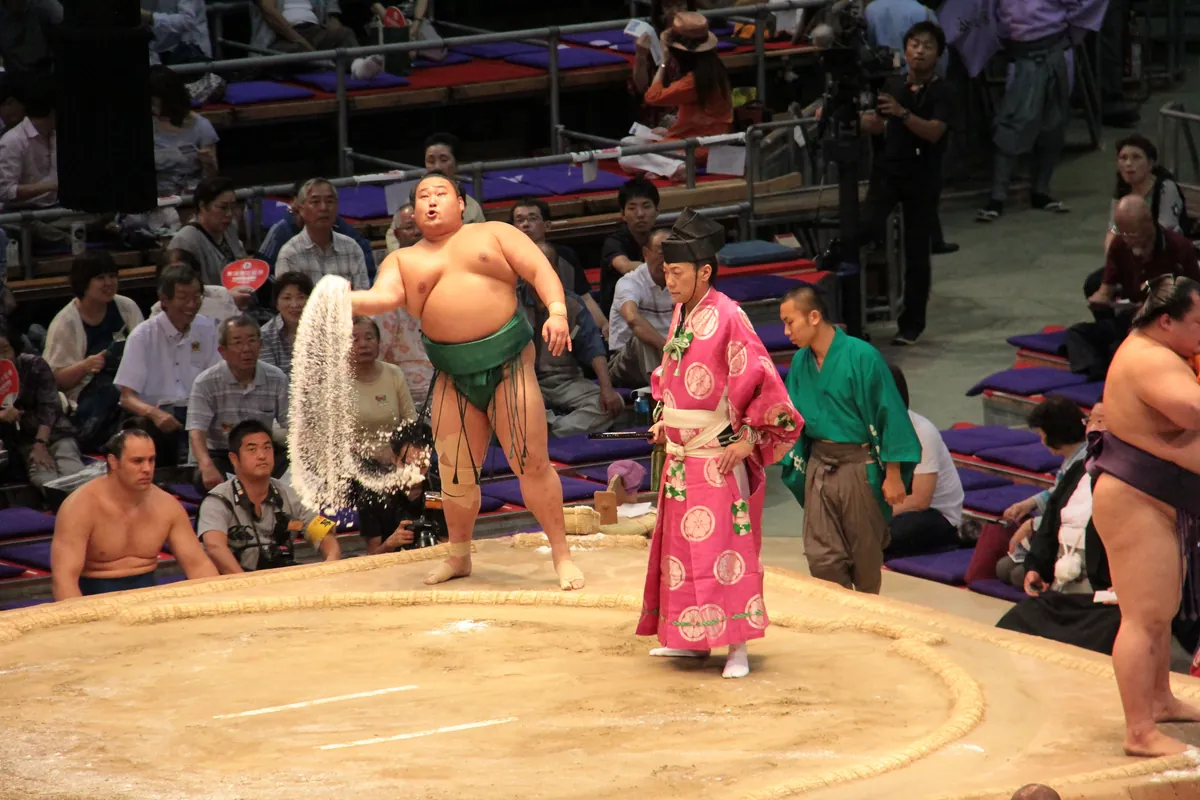
Sumo carries a lot of ritual that a first-time viewer would otherwise miss. Wikipedia says salt thrown into the ring symbolically cleanses it, that wrestlers rinse their mouths with water before a fight in a way it likens to the custom at a Shinto shrine's entrance, and that a warm-up routine is repeated before each bout. Because the demonstration includes the salt purification, you will see at least one of these gestures up close. The MC's job is to say what each one means, and a quick read of the ritual guide gives you a head start, so that the gestures register as a language you half understand rather than as noise.
Read next: Sumo rituals: salt, the crouch and the ring
How a bout is won
Learn one sentence and you can follow every bout: a wrestler loses when he is pushed out of the ring or when his body, other than the soles of his feet, touches the clay. Wikipedia lists 82 recognised winning techniques, yet only about a dozen turn up regularly, so the pushes, grips and throws you see will repeat. Knowing a force out from a push out will not change the show, but it makes the quick bouts far easier to read, and it gives you a sensible question to ask the MC or a friend when a bout ends in a way you did not expect.
Read next: How a sumo bout is won: the kimarite
Who it suits
Families whose children can sit through 75 minutes, first-time visitors to Japan, groups of friends and anyone who wants a sports-flavoured evening that does not take a whole night. The booking page says infants must sit on laps and that photography is allowed, which suits a family that wants pictures. It is also a compact choice: the length leaves room for dinner in Shibuya before or after, or for a second plan, such as a night drive across Tokyo, on another evening of the same trip. Groups of friends tend to enjoy the lottery most, since everyone has a stake in who gets picked. If you are travelling with a mixed group, the short length is an advantage, because nobody has to commit to a long night.
Who this isn't for
A show built to entertain a room cannot also be a quiet look at serious practice, and it should not be booked as one. Sumo wrestlers do their real work in training stables and at the Grand Sumo Tournaments, and this show is neither of those. It is a separate, shorter thing with its own strengths, and those strengths do not include a result that matters or a table to eat at. If any point in the list below describes your plans, look at another booking, or adjust the plans to suit what the show actually is:
- Anyone expecting a Grand Sumo Tournament, with ranked wrestlers and a result that matters.
- Anyone hoping for a meal as part of the ticket.
- Wheelchair users, because the booking page lists them as not suited to this activity.
- Anyone counting on a turn in the ring, because places go by lottery.
- Anyone who wants a quiet, serious look at wrestlers training.
Booking it well
Open the calendar, choose a date and read the start times it shows, since the show runs for 75 minutes and the times are set day by day. The page warns that places may go quickly, so pick early if your dates are fixed, and pick with the rest of your evening in mind. Keep the confirmation: it names the meeting point, which lies in Shibuya ward on the Yoyogi side, not necessarily beside the scramble crossing. Bring a charged phone for the photographs, eat beforehand, and leave a little slack in case your first attempt at the route goes wrong.
The bottom line
Go for a compact, well-explained introduction to sumo, with a chance to step into the ring and to be photographed with the wrestlers. Go with the right expectations: a display, not a tournament; a lottery for the ring; no meal; a short evening. If those four points sound fine, this is one of the easier ways to see sumo up close in Tokyo, and the MC's explanation of the rituals and the rules is the part that turns a loud room into a sport you can follow. If any of the four is a problem, you have lost nothing by finding out before you booked.
Frequently asked questions
Is the Shibuya sumo show worth it?
For a first-time visitor, yes. Sumo wrestlers demonstrate techniques, rituals and bouts over 75 minutes while an English-speaking MC explains. It is a show, not a tournament, and no meal is included.
Will I get to step into the ring?
Maybe. Some guests get to take on a wrestler, but spots are few and a lottery picks when too many people apply. Treat the ring as a bonus, not a promise.
Is a meal included?
No. The ticket lists a welcome drink of bottled water and no meal. Eat before or after the show.
Is it a real tournament?
No. The booking page calls it an entertainment show. Tokyo's real tournaments are held at the Ryōgoku Kokugikan.
How long is it?
75 minutes. Start times differ by date in the calendar, so look before you book dinner.
Can children go?
The booking page says infants must sit on laps and photography is allowed. It lists wheelchair users as not suited to the activity.
Sources