The quick verdict
Is the Shibuya sumo show worth it, and will I get to step into the ring?
For a first-time visitor who wants a quick, well-explained look at sumo, yes. Over 75 minutes, sumo wrestlers demonstrate techniques and rituals, including the salt purification, and fight bouts a few steps from your seat, while an English-speaking MC says what you are watching. Afterwards a few guests may be drawn to take on a wrestler in the ring, and photographs are welcome. The booking page calls it an entertainment show rather than a tournament, and the ticket includes no meal. If you expect ranked wrestlers or dinner, book something else. If you want a lively introduction, this one delivers it.
Five things worth knowing first
A show, not a tournament
The booking page says outright that this is an entertainment show. Wrestlers demonstrate and nothing is decided. Wikipedia counts six Grand Sumo tournaments a year across four cities, and Tokyo's are held at the arena in Ryōgoku.
The ring turn is a lottery
Taking on a wrestler is open to guests, yet places are few and a draw settles it when more people apply than there are spots. Book for the demonstration and treat the ring as a bonus.
No meal on this ticket
The only refreshment on the ticket is a bottle of water as a welcome drink. No meal is included; have dinner beforehand or afterwards, and Shibuya has plenty of places for it.
The meeting point is in the ward
Shibuya is the name of a whole ward. The meeting point sits on its Yoyogi side rather than at the famous crossing, and your confirmation gives the exact spot.
Access and children
Infants sit on laps, photography is allowed, and wheelchair users are listed as not suited to this activity.
How a bout is won
Six ways a sumo bout ends
A sumo bout rests on one rule and a long list of techniques. These six pieces, as the English Wikipedia describes them, are the ones worth knowing before you watch a bout up close. Japan's sumo association recognises 82 winning techniques, but only about a dozen turn up regularly. What follows is background on the sport, not a description of what this show will stage.
-
The rule
Out or down
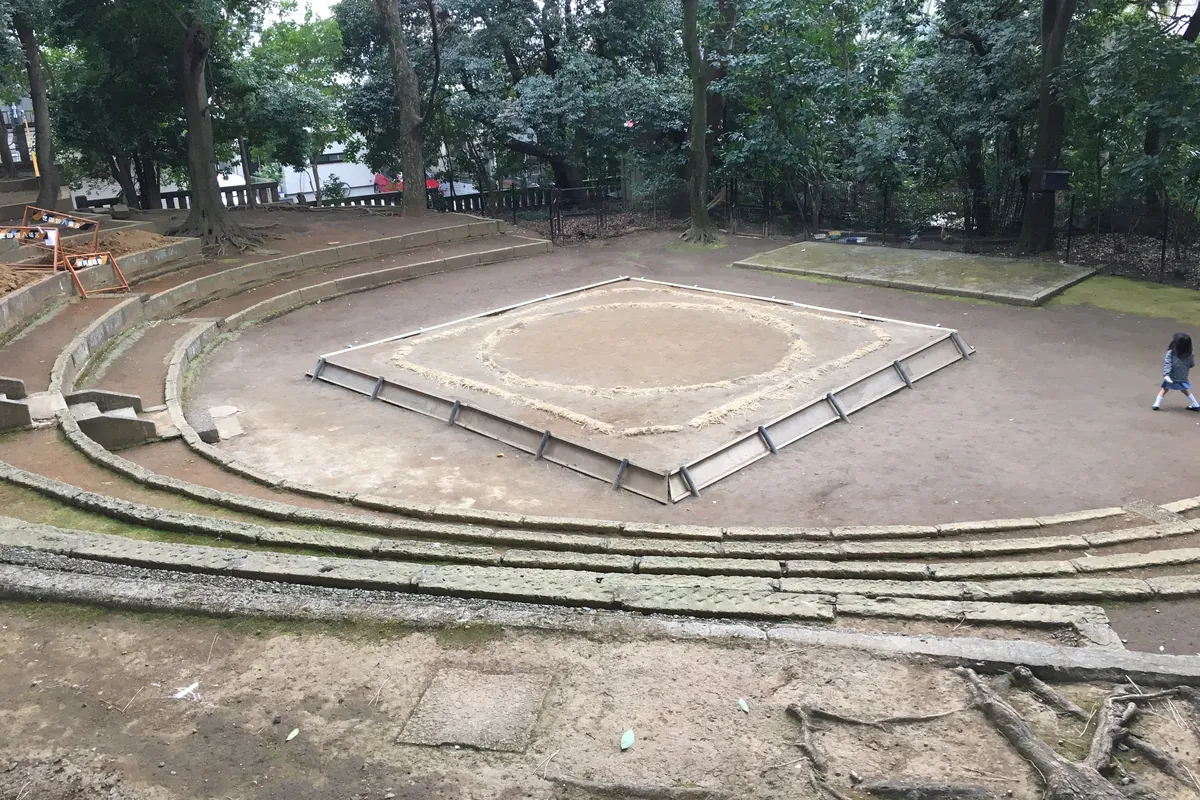
Wikipedia sums up the sport in one sentence: a wrestler loses when he is forced out of the dohyō, the ring of rice-straw bales, or when he touches the clay inside it with any part but the soles of his feet. Nothing more is needed to decide a bout. There are no weight divisions, so a wrestler can sometimes face an opponent twice his size, and that is why technique matters so much.
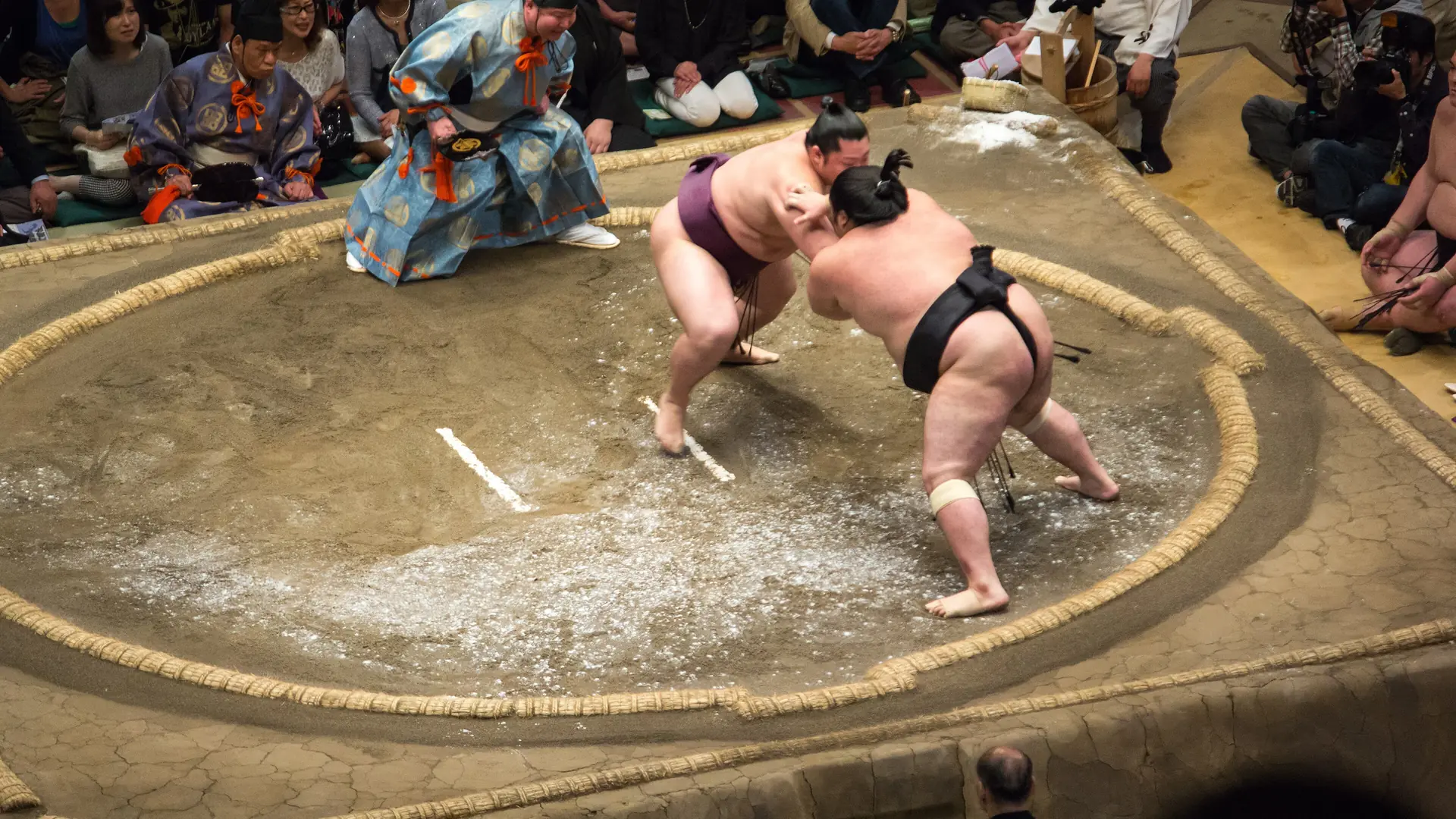
An open-air sumo ring on its clay platform
-
The staple
Yorikiri
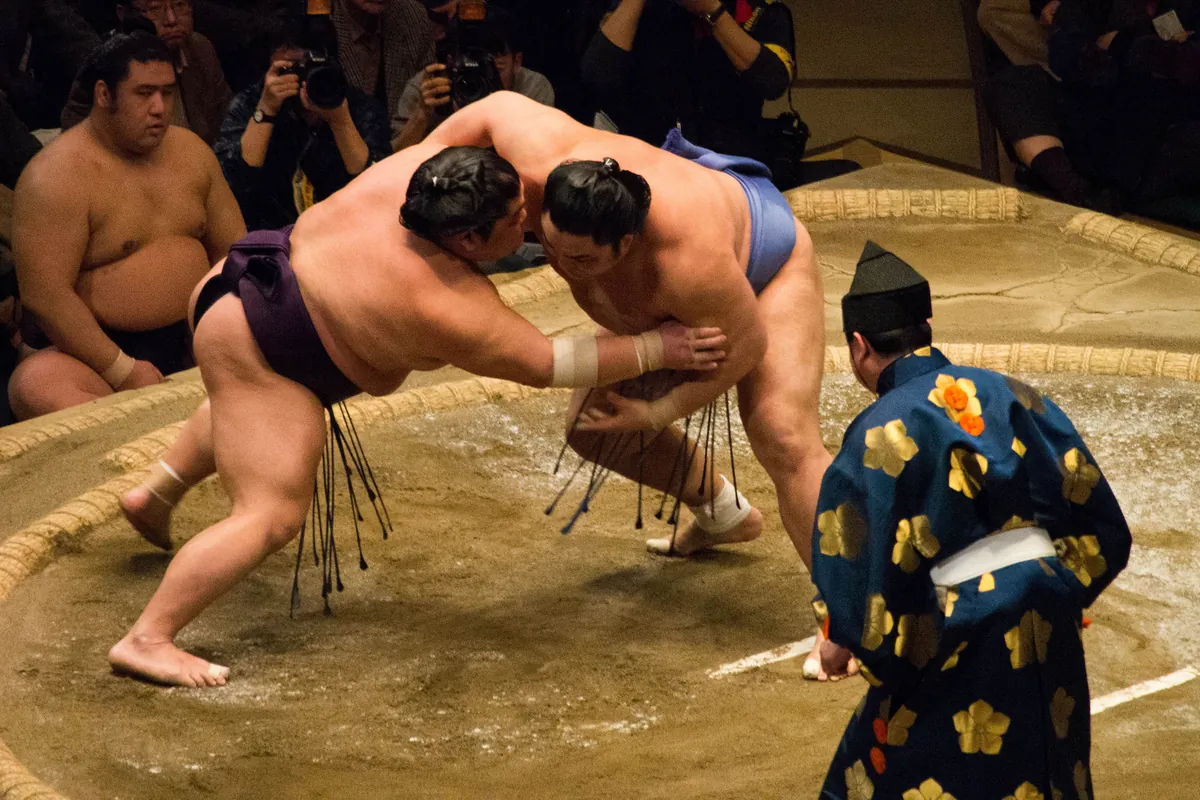
Yorikiri, the frontal force out, is the plain walk-him-out win. The wrestler keeps a grip on his opponent's mawashi, the belt, or a full body hold, and drives him over the edge. Wikipedia calls it the most common kimarite and gives it 32.4 per cent of all professional matches. It belongs to the belt style, yotsu-zumō, where the grip is the whole plan.
Two wrestlers lock together at the centre of the ring
-
The shove
Oshidashi
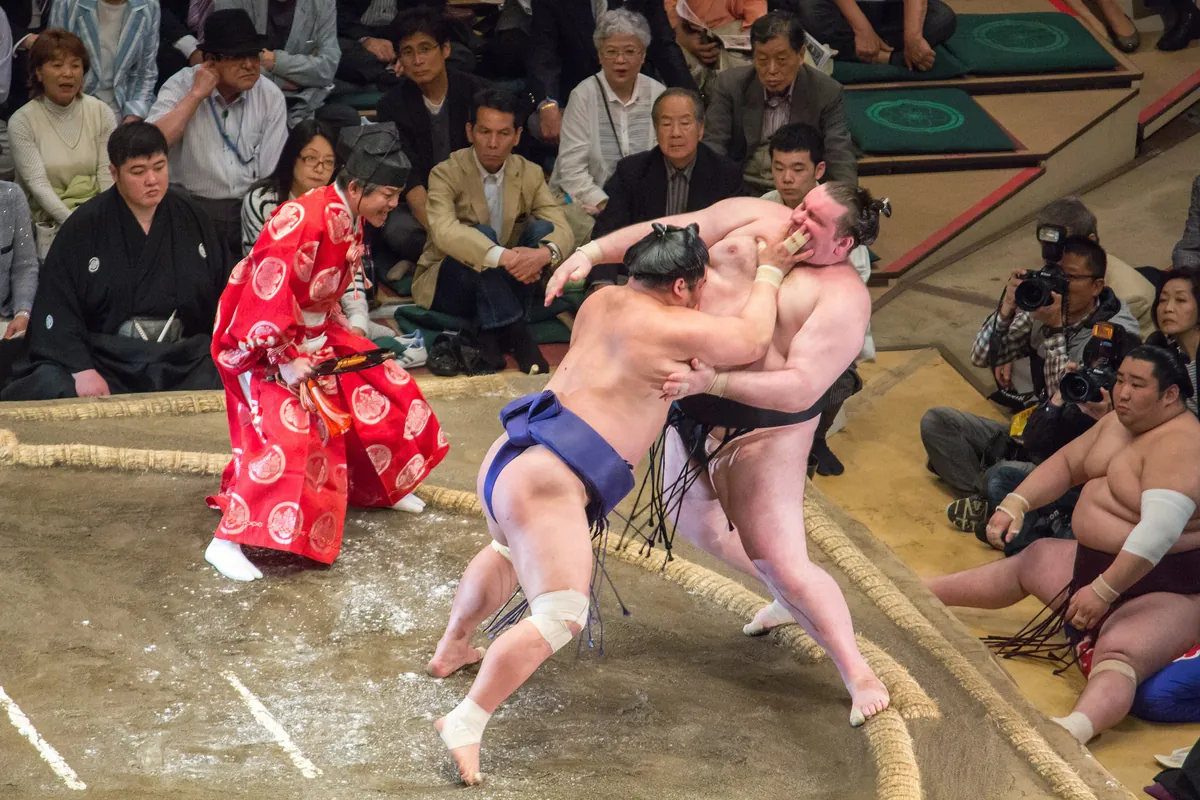
Oshidashi is the frontal push out. The arms do the work, the belt is never held, and contact lasts until the opponent is out. Wikipedia pairs it with the belt style as the other basic approach, oshi-zumō, where a wrestler pushes and thrusts instead of settling into a clinch. Its close cousin, tsukidashi, thrusts without keeping contact.
A pushing exchange at a Tokyo tournament
-
The throw
Uwatenage
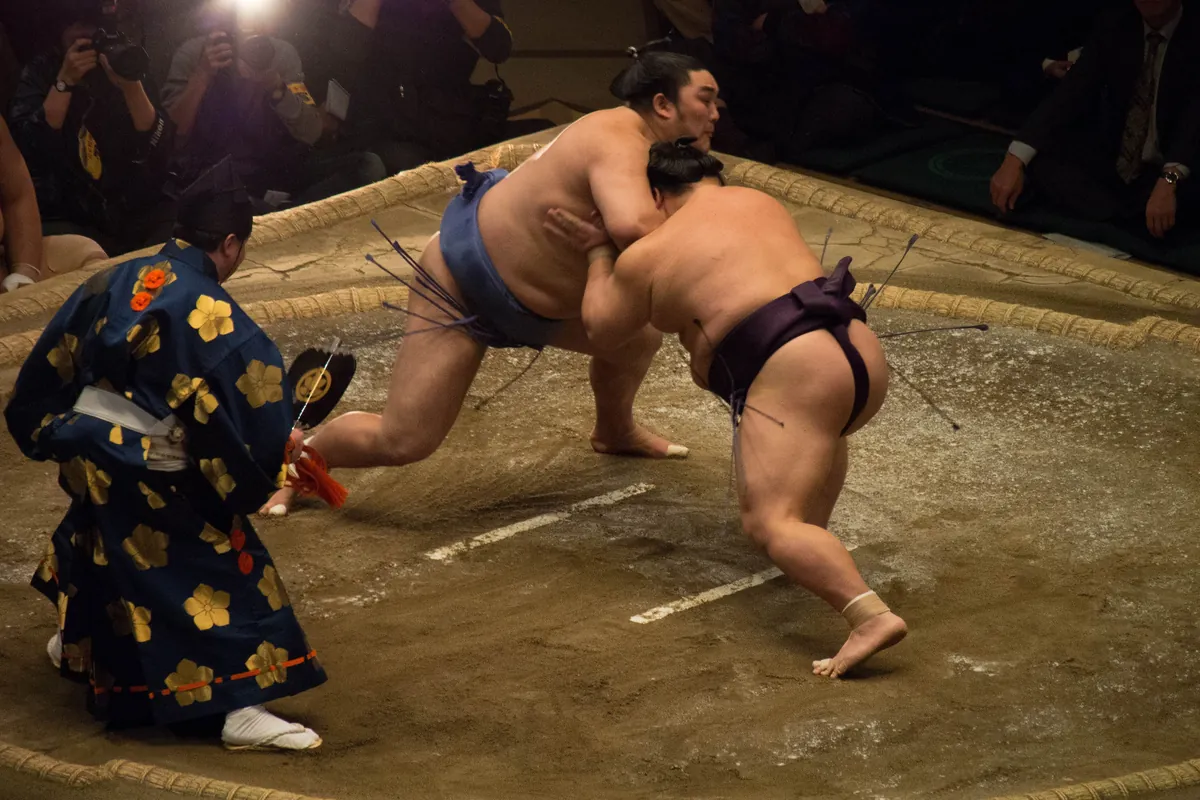
Uwatenage is the overarm throw. The attacker reaches over his opponent's arm, takes hold of the mawashi and throws him to the ground while turning sideways. It sits in the group of throwing techniques, which also holds hip throws and headlocks. Wikipedia notes that with superior technique, smaller wrestlers can control and defeat much larger ones, and throws are how that happens.
A bout in progress beside the straw edge
-
The last resort
Hatakikomi
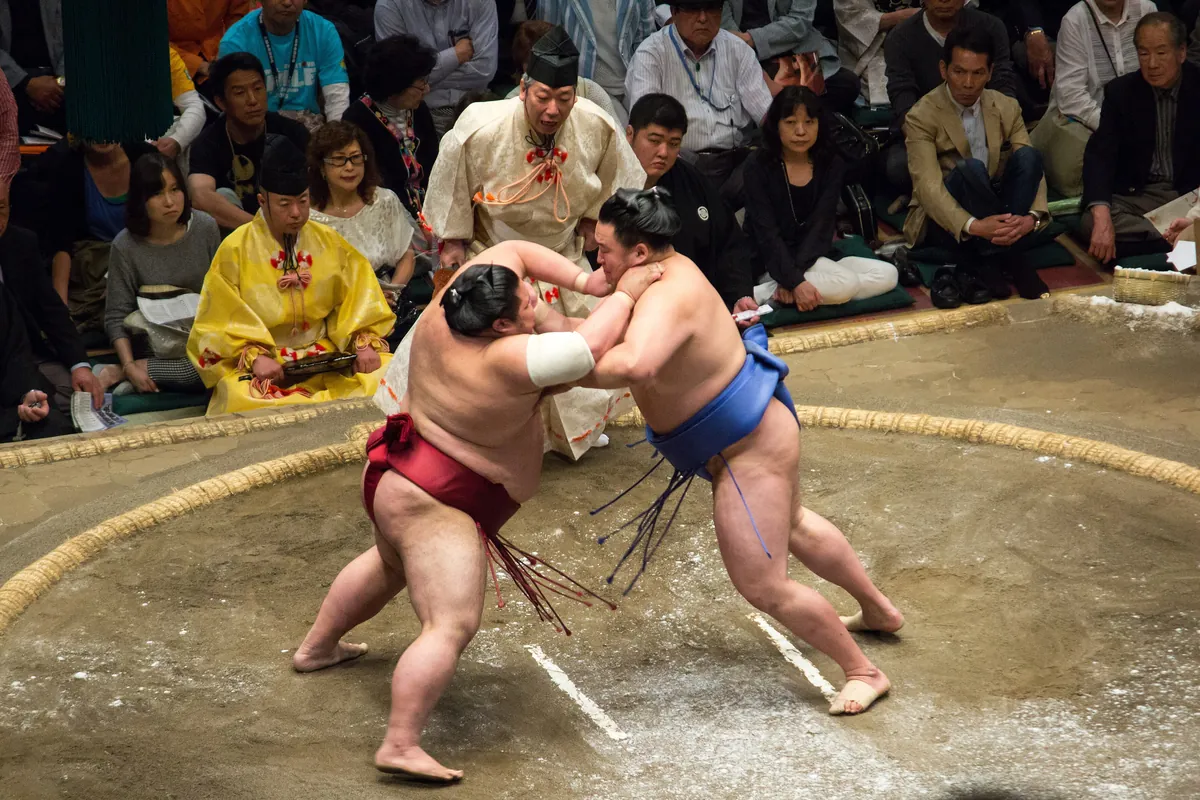
Hatakikomi is the slap down: a wrestler slaps his opponent's shoulder, back or arm and makes him fall forward to touch the clay. Wikipedia says many see it as a last resort when a wrestler is being driven back, though some use it as a main weapon. One wrestler won with it in roughly 27 per cent of his career victories.
Two wrestlers in a clinch, a referee close behind
-
The verdict
Gunbai
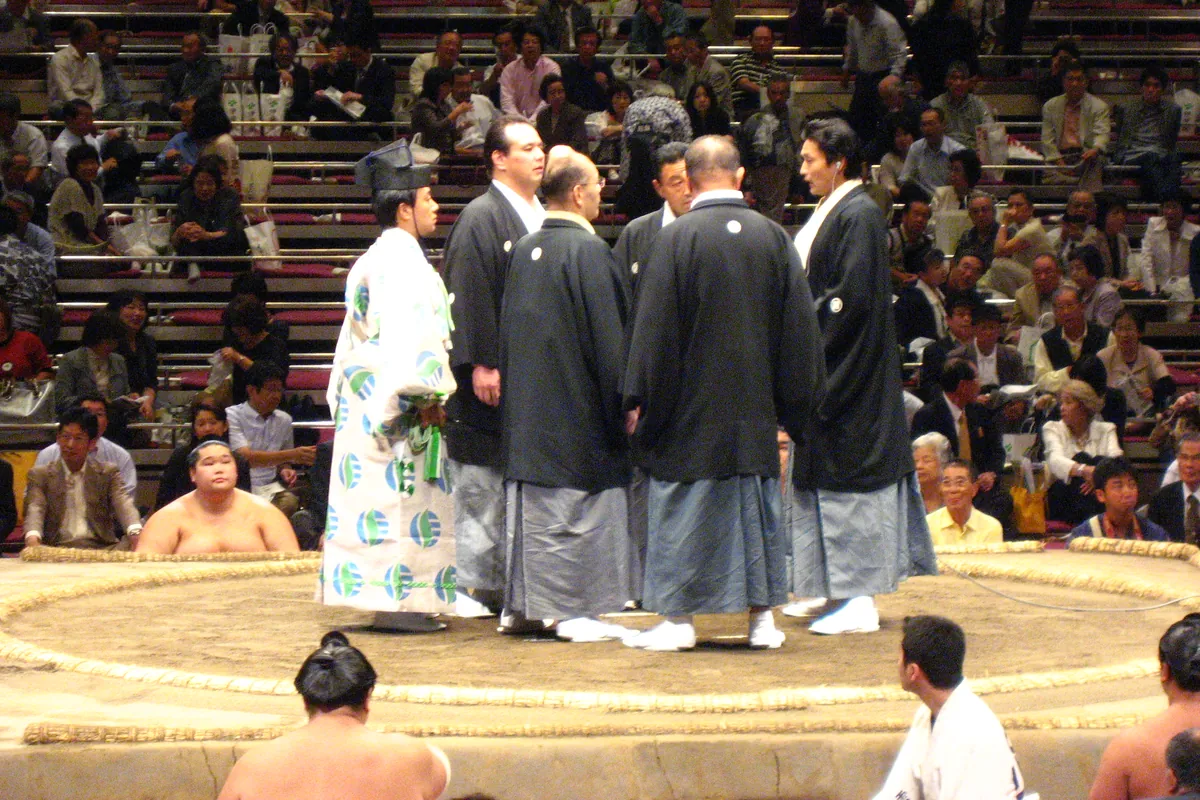
At the end the gyōji, the referee, points his gunbai, a solid war fan, at the winner's side. Wikipedia explains that the call is not always final: one of five judges around the ring can challenge it, a conference called a mono-ii follows, and the result may be confirmed, overturned or sent to a rematch. The gyōji then announces the winner's ring name.
Judges conferring at the ring to review a close call
Sources: the English Wikipedia articles on sumo, kimarite, dohyō, gyōji and gunbai. The photographs come from Tokyo tournaments. None is a picture of this show, and none shows the technique named beside it.
Show or tournament
This show or a Grand Sumo Tournament?
What the ticket covers
What the ticket lists and what it leaves out
Everything below is as the booking page states it. Your confirmation adds the exact meeting point.
Open the booking calendar ↗Choose your currency in the booking calendar; the total is displayed before payment.
- The setting
- A club room in Shibuya ward, fitted out for sumo. The booking page puts the meeting point on the Yoyogi side of the ward, so follow your confirmation rather than the name of the district.
- Who runs it
- The club that hosts the show stages it, and Traveling Tokyo sells it as the activity provider. GetYourGuide takes the booking, and this guide has no tie to any of the three.
- On the ticket
- A sumo show with live demonstrations, a welcome drink of bottled water, the chance to challenge a wrestler, photo opportunities with the wrestlers and an English-speaking MC.
- Not on the ticket
- A meal. Nothing on the page promises food, so do not count on it, and have dinner before you come or afterwards.
- The host
- An MC who speaks English runs the show and explains the rituals and the rules of the sport.
- The ring
- Guests may step in to challenge a wrestler. Places are limited, and a lottery decides if too many people apply.
- Photographs
- Photography is allowed, and the ticket includes photo opportunities with the wrestlers.
- Who can come
- Infants sit on laps. Wheelchair users are listed as not suited to the activity, so ask the booking page before you rely on it.
Sumo show or night drive
A sumo show or a night drive through Tokyo: which evening?
Book the show, then plan the rest of the night
A sumo show, a night drive, a workshop and a palace walk
The sumo show is the main booking. Beside it sit the night drive this page weighs it against, a chopstick workshop in Ginza and a walk through the Imperial Palace grounds, each with its own calendar.
- Look up dates ↗
The Shibuya sumo show
A 75-minute entertainment show in which sumo wrestlers demonstrate techniques and rituals and fight bouts, an English-speaking MC explains, and a few guests may be drawn to challenge a wrestler.
- Look up dates ↗
Tokyo night drive in tuned cars
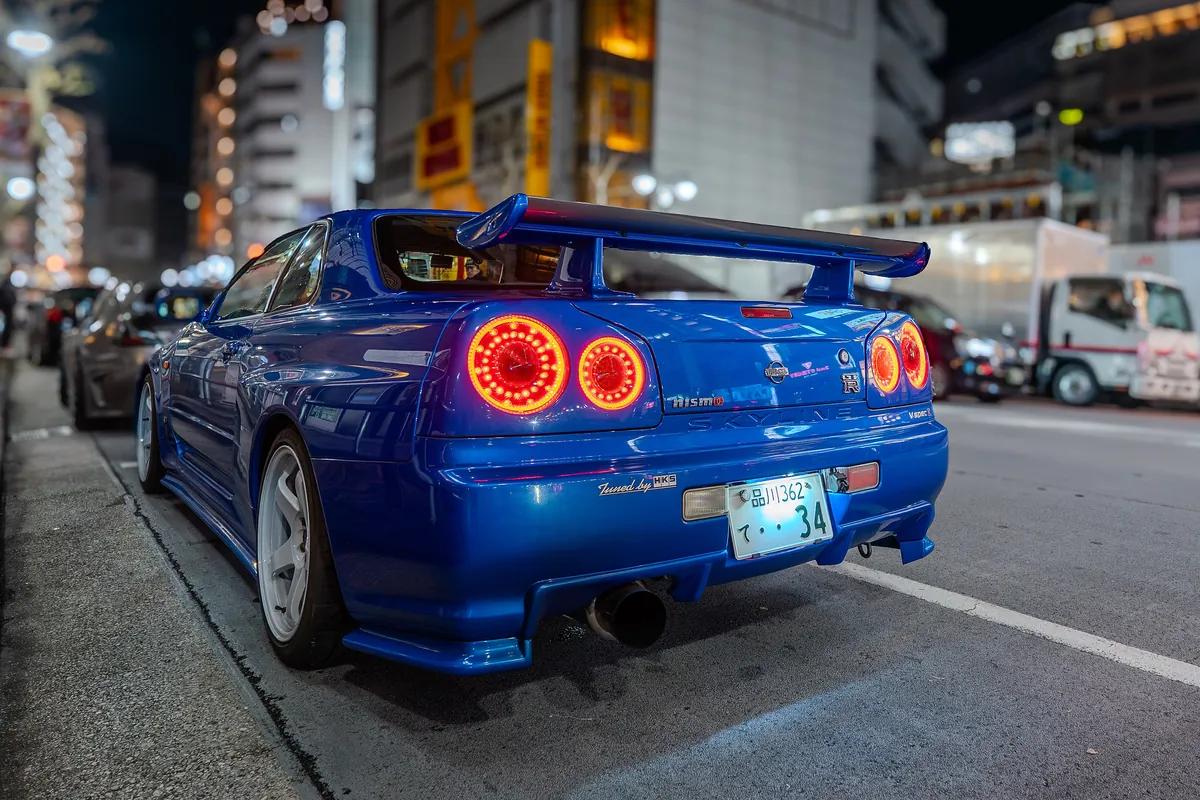
A ride of three to four hours in a Japanese sports car out to the Daikoku Parking Area and across Rainbow Bridge, ending with a drop-off in central Tokyo. You cannot choose the car, and the ride is shared rather than private.
- Look up dates ↗
Ginza chopstick workshop
A one-hour workshop in Ginza where you choose a wood, shape a pair of chopsticks with a hand plane, sand them, oil them and take them home the same day.
- Look up dates ↗
Imperial Palace walk
A two-hour small-group walk over the grounds of the former Edo Castle and the palace's East Gardens, with a guide who tells the story of Japanese history along the way.
Other things to book in Tokyo
Getting there and planning the night
Getting to the show and planning the night
By train
Wikipedia lists Shibuya Station as served by the JR Yamanote and Saikyō lines, the Tokyo Metro Ginza, Hanzōmon and Fukutoshin lines, and the Tokyu and Keiō lines. Shibuya is the whole ward, though, so use the meeting point in your confirmation to plan the last stretch.
Eat first or after
The ticket carries no meal, and its only drink is a bottle of water. Wikipedia calls Shibuya a major commercial and entertainment district, so food is easy to find near the show.
Choose the date early
The show is marked likely to sell out. Open the calendar, pick a date and read the start times it shows before you plan anything around it.
If you want the ring
Spots are few and a draw decides when applicants outnumber them, so a turn in the ring is a bonus. Come for the demonstration and be pleased if you are picked.
Taking photos
Photography is allowed, and photographs with the wrestlers are on the ticket, so bring a charged phone.
With children
Infants must sit on laps. For older children, 75 minutes is short enough to hold attention, and the MC explains things in English.
After the show
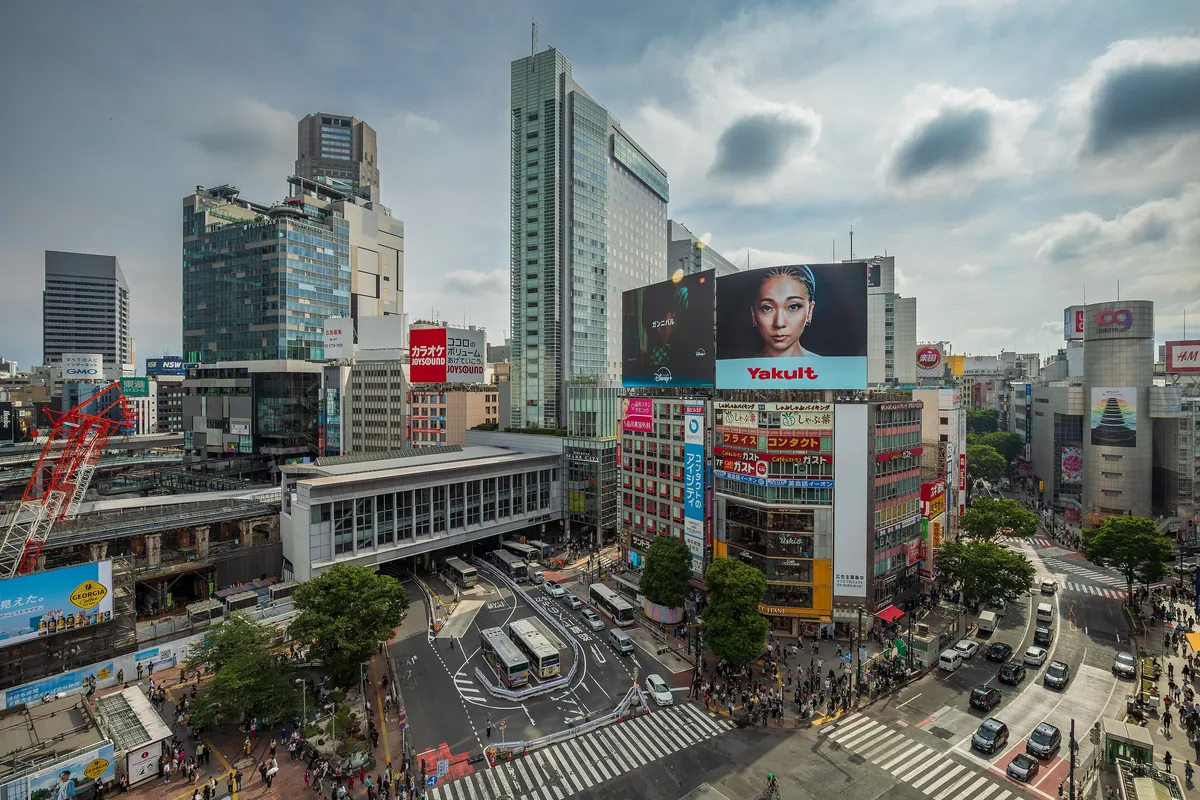
The scramble crossing sits near Shibuya Station, and Wikipedia calls it the world's busiest pedestrian crossing. A walk through it on the way back makes a fair end to the night.
Who should skip it
Anyone who wants a serious, quiet look at wrestlers, a meal on the ticket or a seat for a wheelchair should look at other bookings. This is a display made to entertain a crowd.
Sumo up close, and Shibuya from above
Sumo up close, and Shibuya from above
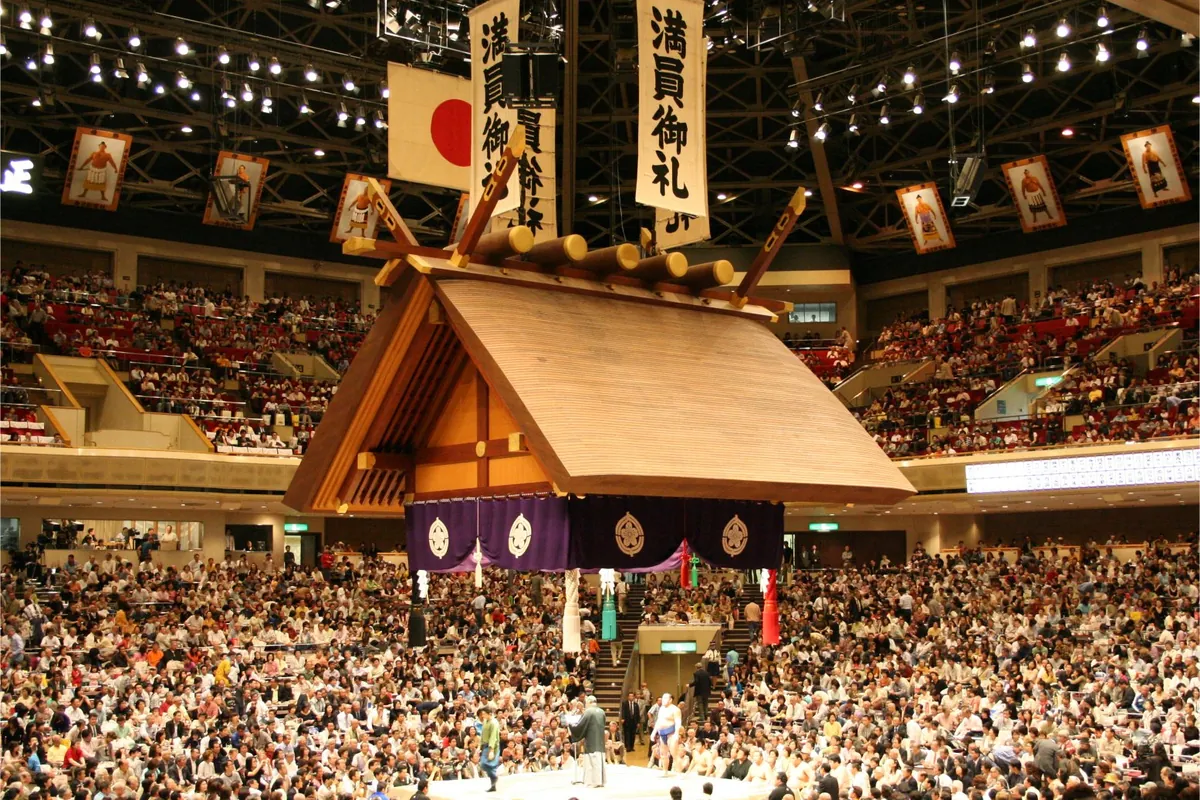
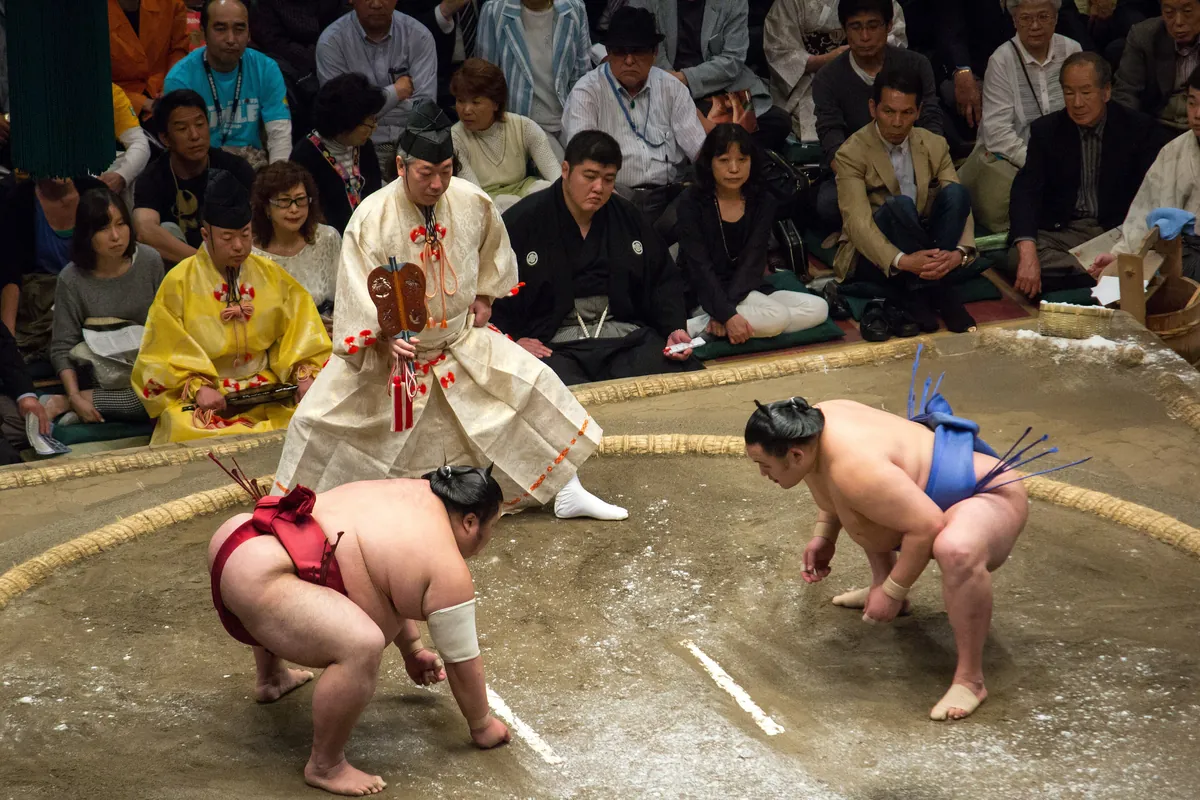
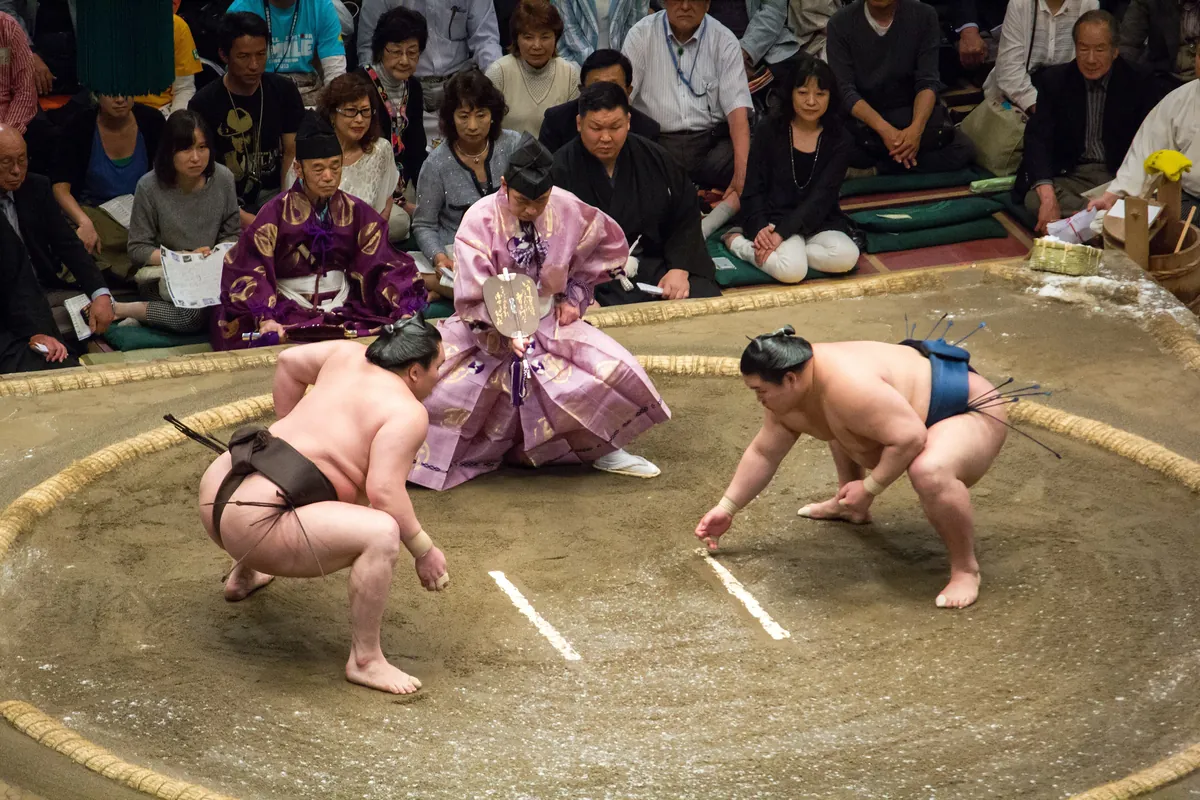
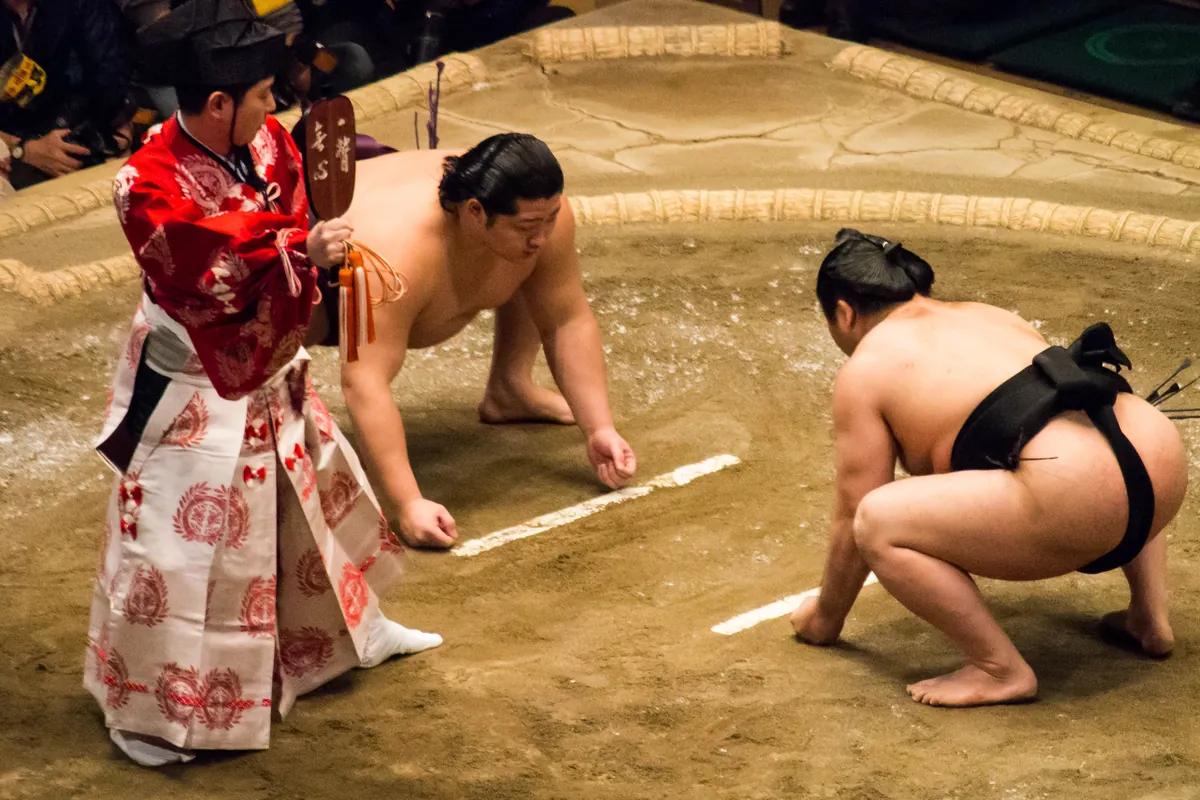
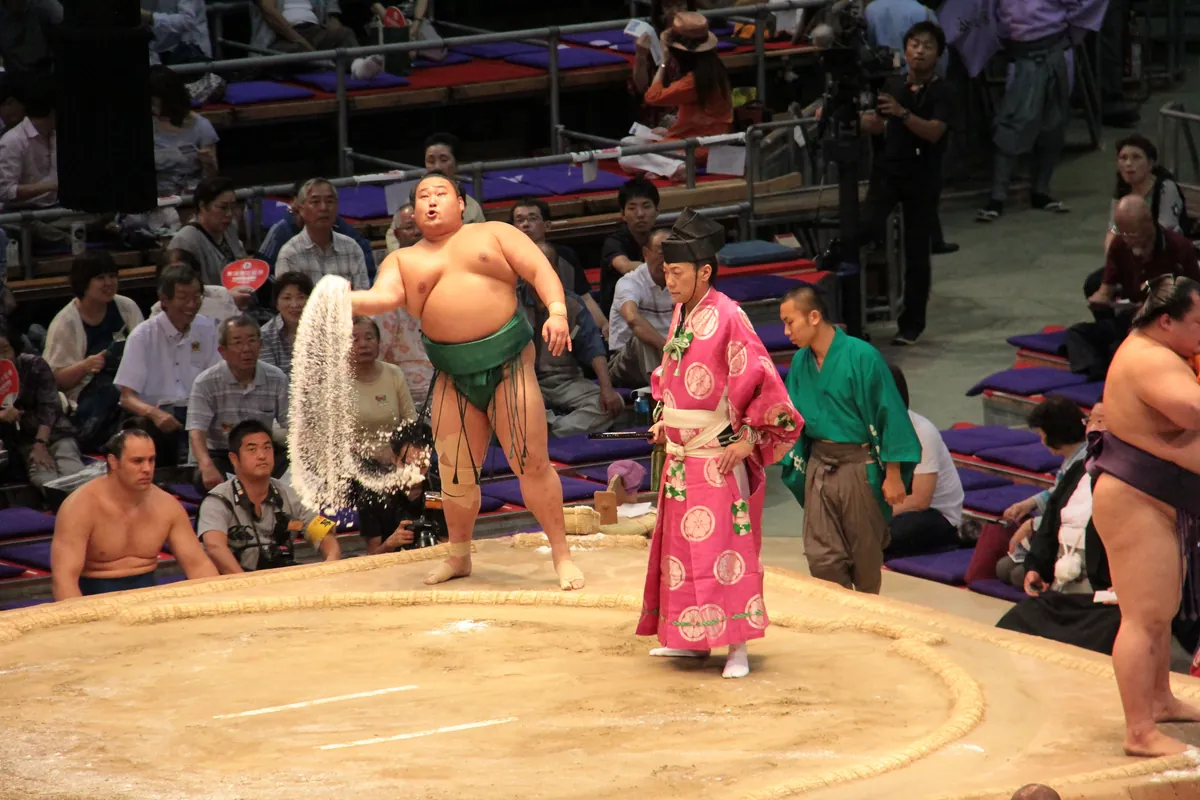
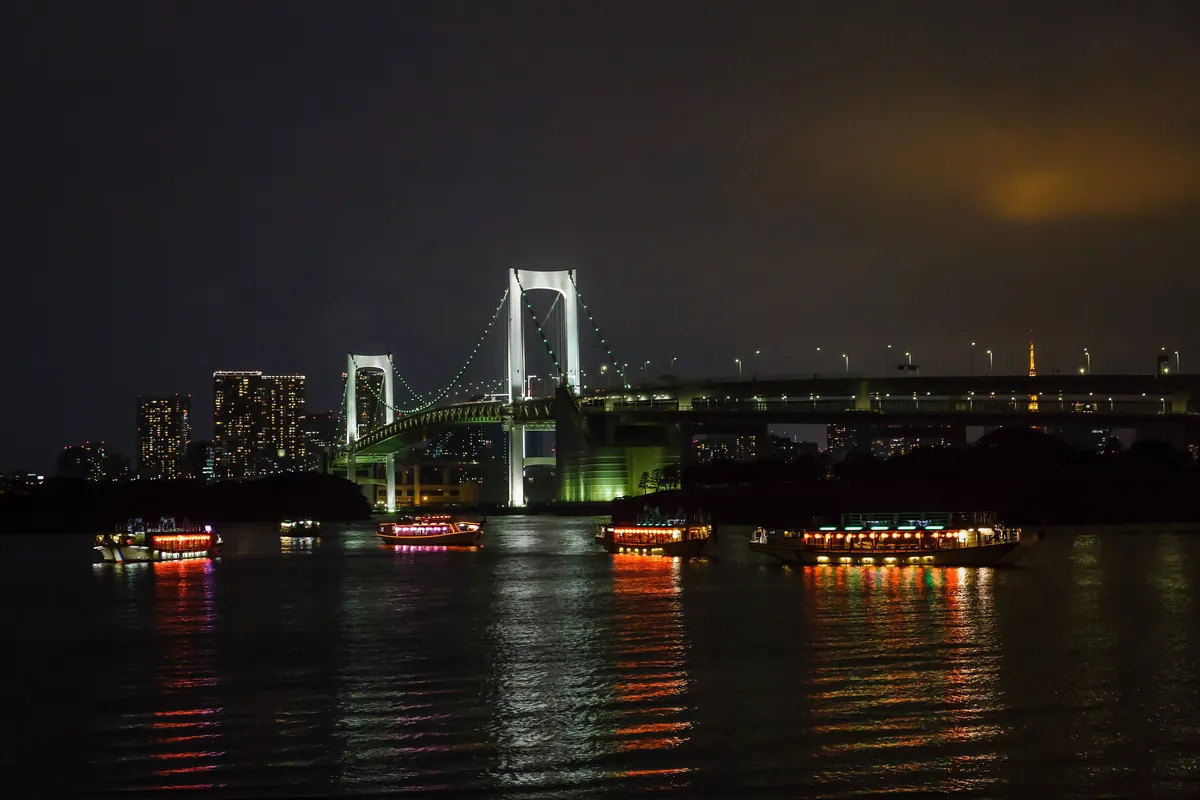
Pictures from Tokyo tournaments, a shrine-style ring and the streets of Shibuya. No picture here comes from this show, its room or its performers.
Before you book, read these
Guides to the bout, the rules and Shibuya itself
- Start here Shibuya sumo show: is it worth it? Is the Shibuya sumo show worth it, and will you get to step into the ring? What the wrestlers demonstrate, what the ticket leaves out and who will enjoy it. Open the guide →
- Compare Sumo show or Tokyo night drive? A sumo show in Shibuya or a night drive across Tokyo in a tuned sports car: which evening should you book? Length, effort, weather, getting home and who each suits. Open the guide →
- The moves How a sumo bout is won: the kimarite One rule, a long list of techniques and a referee's fan: how a sumo bout is won, which moves you will see most and why a verdict can be challenged. Open the guide →
- The rituals Sumo rituals: salt, the crouch and the ring Why salt is thrown, why wrestlers crouch and glare, and why a shrine roof hangs over the ring: the rituals of sumo explained from public sources. Open the guide →
- Real sumo Grand Sumo Tournament or exhibition show? What a Grand Sumo Tournament is, where Tokyo's are held, and how an exhibition or show differs: rank, stakes, length and what that means for your booking. Open the guide →
- The district Shibuya before and after the sumo show Shibuya is a ward as well as a station. How the show's address fits the map, how the rail network reaches the area and what to do around the show. Open the guide →
FAQ
What people ask before booking
Is the Shibuya sumo show worth it, and will I get to step into the ring?
For a first-time visitor, yes: sumo wrestlers demonstrate techniques, rituals and bouts over 75 minutes while an English-speaking MC explains. The ring turn is separate. Spots are few and a draw picks guests when too many apply, so treat it as a bonus.
Is this a Grand Sumo Tournament?
No. The booking page calls it an entertainment show. Six Grand Sumo tournaments are held each year across four cities, and a show like this one has no bearing on any wrestler's rank.
Is food included?
No. The ticket lists a welcome drink of bottled water and no meal, so eat before or after. Nothing on the booking page promises snacks, and this guide does not either.
How does the ring challenge work?
Once the demonstration ends, some guests are invited to take on a wrestler. Spots are few, and a draw picks the guests when more people apply than there are spots. A turn cannot be booked in advance.
Where is it, and is it at Shibuya Station?
It is in Shibuya ward, on the Yoyogi side, so it is not beside the scramble crossing. The confirmation email gives the meeting point; plan your route from that rather than from the station name.
Who can come?
The booking page lists infants as sitting on laps and photography as allowed, and it lists wheelchair users as not suited to the activity. Ask the booking page if you have a question about access.
What else is on the ticket?
A welcome drink of bottled water, photo opportunities with the wrestlers and an English-speaking MC. Live demonstrations and the bouts are the main part of the show.
What are the cancellation terms?
The page grants a full refund when you cancel a day or more before the start. It also lets you reserve now and pay later, so a place can be held without paying today.
Is this the club's own website?
No. Shibuya Sumo Guide is written on its own account and is not run by the club, by any wrestler or by the company that sells the show. Any booking started from a link here is handled by GetYourGuide.