The rituals
Sumo rituals: salt, the crouch and the ring
Why salt is thrown, why wrestlers crouch and glare, and why a shrine roof hangs over the ring: the rituals of sumo explained from public sources.
Reserve a place at the ring ↗Quick answer
Sumo keeps many ritual elements that come from Shinto. Wrestlers throw salt into the ring to cleanse it symbolically, rinse their mouths with water before a bout and repeat a warm-up routine, the shikiri, before the charge, the tachi-ai. The ring is purified and consecrated once it is built, and in Tokyo a shrine-style roof hangs above it. Knowing the gestures turns the pauses between bouts from waiting into part of the sport.
Salt
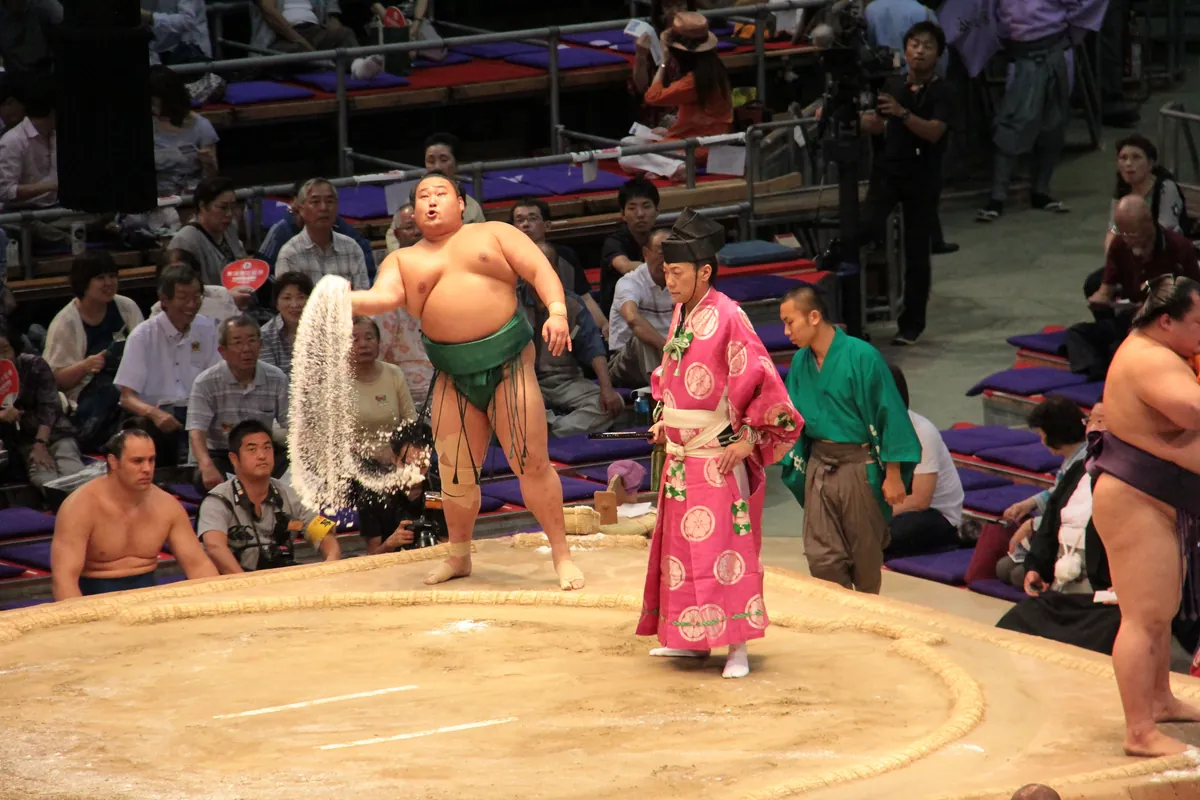
Wikipedia says the tossing of salt into the ring by the wrestlers serves as a symbolic cleansing of the ring. It describes salt purification as a ritual element that comes from Shinto, the same tradition that surrounds the dohyō. The handful thrown into the air is the most photographed gesture in the sport, and at a demonstration it is often the first thing a visitor remembers. Nothing about it affects the result of a bout.
Water for the mouth
Before a fight, wrestlers rinse their mouths with chikara-mizu, or power water. Wikipedia compares it with the custom observed at the entrance to a Shinto shrine. It is a small gesture, easy to miss, and it comes before the salt and the crouch. Seeing it explained in English by an MC is one of the simple pleasures of a show: the point of the gesture becomes clear once you know where it comes from.
The warm-up routine
Before a match begins, the two wrestlers perform and repeat a warm-up routine called shikiri. Wikipedia says the top division is given four minutes for shikiri and the second division three, after which the timekeeping judge signals to the gyōji that time is up. The routine builds the tension that makes the charge so sudden. At a short demonstration the full routine may be shortened, and what is shown on a given day cannot be promised.
The charge
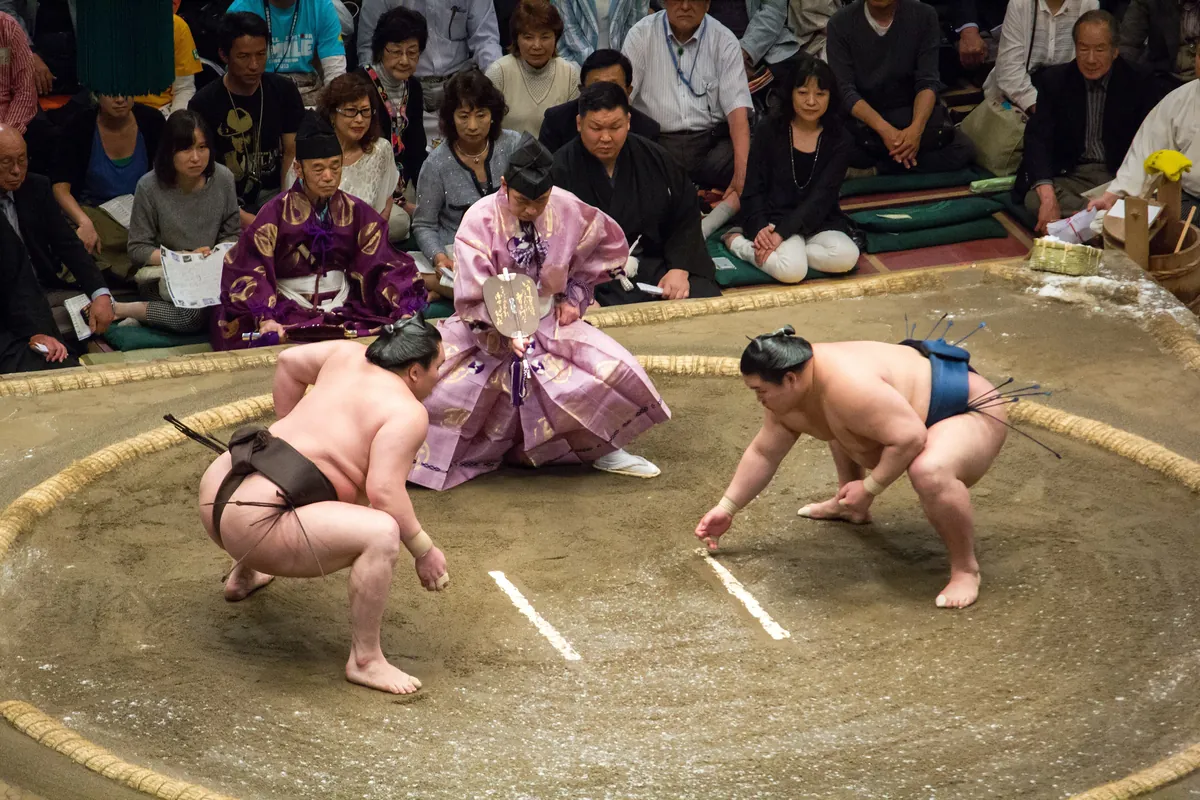
The tachi-ai is the initial charge between two wrestlers, from two words meaning stand and meet. Wikipedia lists the ways wrestlers use it: a head-first charge, a thrust to the chest, a slap to the face, a grab of the belt, or a dodge. The rules say both wrestlers must touch both fists to the floor before it. That rule was widely ignored by the 1970s, and a crackdown in 1984 brought it back, with concern that it raised the risk of head clashes.
The ring is consecrated
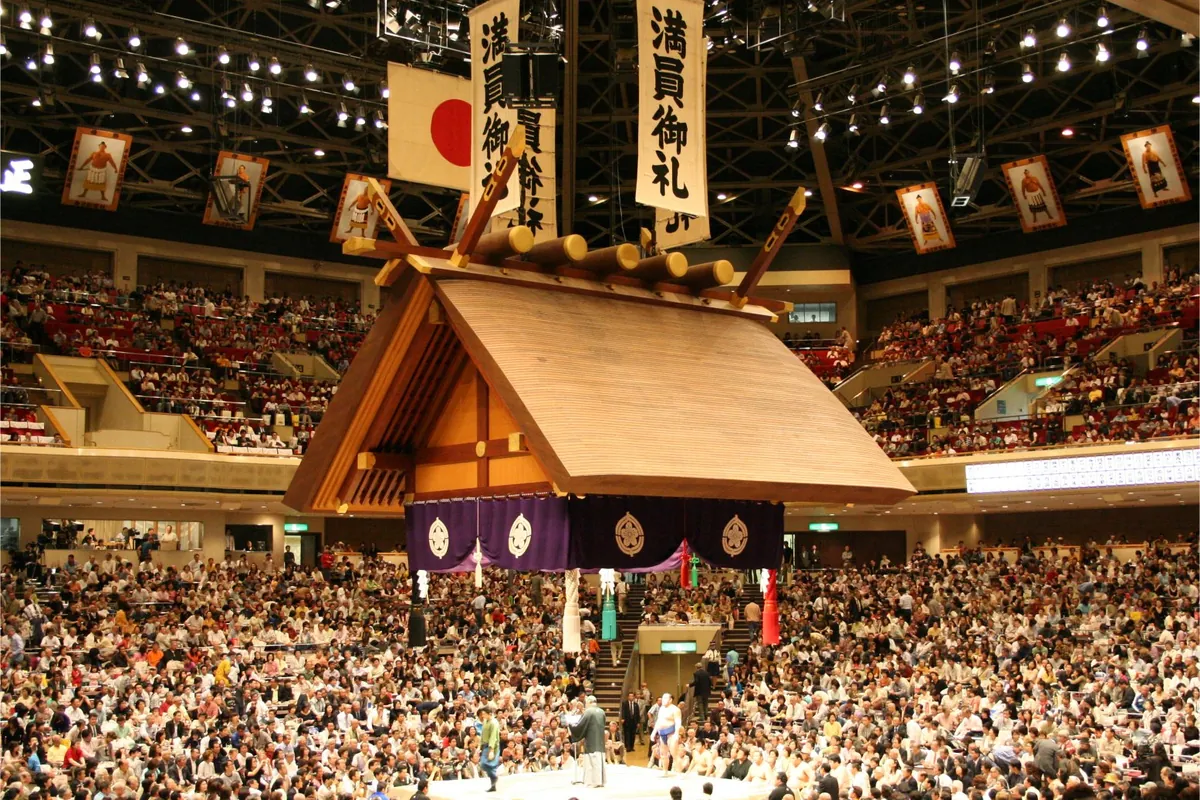
Once a ring has been built, a ceremony called the dohyō matsuri is held. Wikipedia says it purifies and consecrates the ring and invites the kami, Shinto deities, to watch, with senior referees taking the place of priests. Above the ring at the Ryōgoku Kokugikan hangs the tsuriyane, a roof built like those of Shinto shrines. It is a reminder that the dohyō is treated as more than a sports floor.
The belt
The mawashi is the loincloth wrestlers wear in training and competition. Wikipedia says that for top-ranked professionals it is made of silk, about nine metres long when unwrapped, wound several times around the body and tied in a large knot behind. In training, wrestlers wear a heavy white cotton belt. The belt is also the thing wrestlers grab, which is why so many techniques are named for what they do with it.
What a show may include
These are the rituals of the professional sport. A show may include some of them, a few or none, and the booking page names only the salt purification. It also lists an English-speaking MC who explains the rituals and rules, which is the useful part for a newcomer. Treat this guide as a map: when something unfamiliar happens in the ring, you will have a short list of places to look for the reason.
Sources